
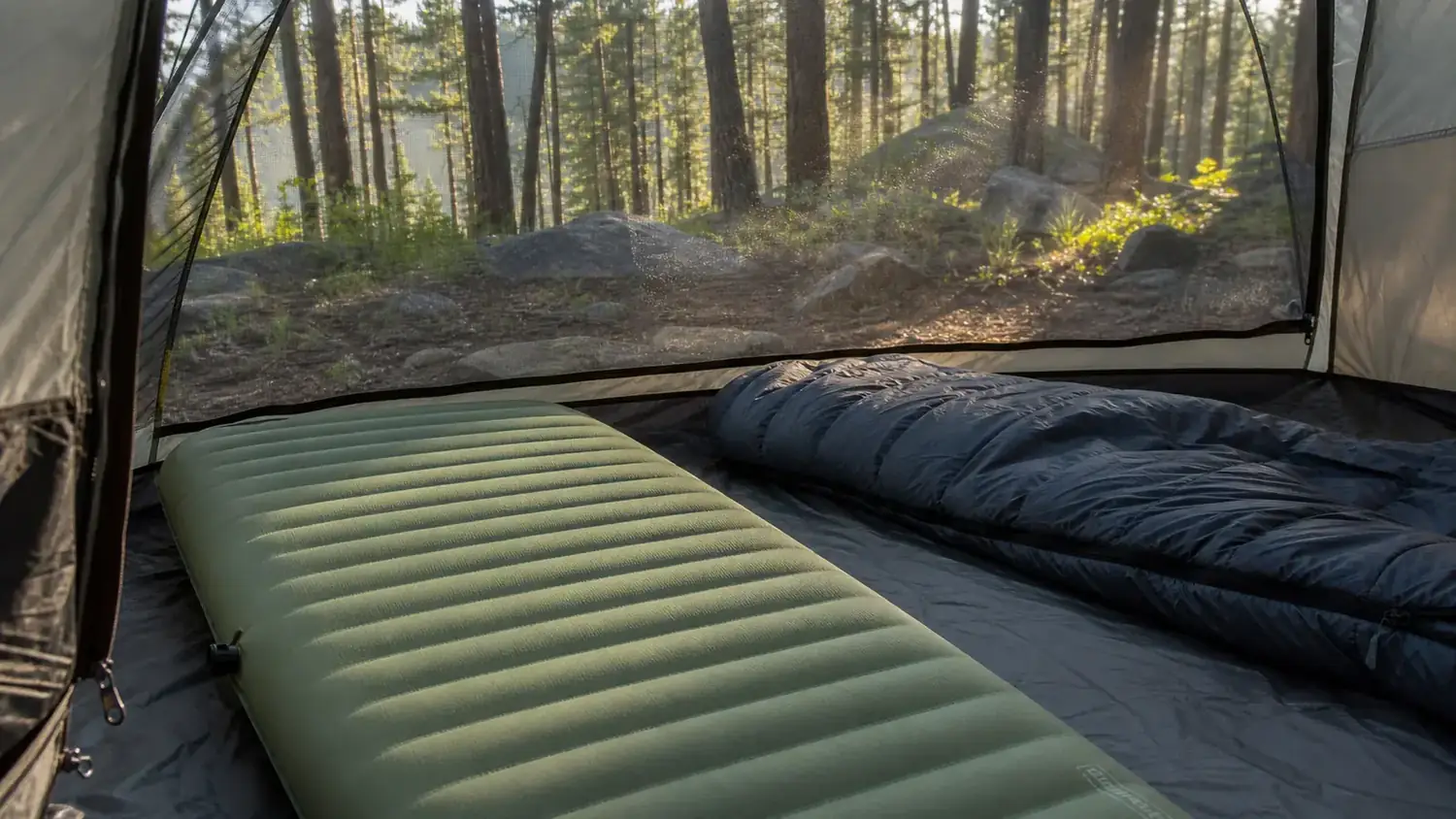
Let me tell you the thing that gets left out of almost every sleeping pad review: what happens after trip number eight. Everybody tests gear for a weekend and calls it good. I am on my thirty-third night with the Gear Doctors Oxylus, and that longer timeline changes the story in a few specific ways you should know before you hand over your money.
I picked this pad up because the R-4.3 rating and the self-inflating design looked genuinely strong for the current price. And on those two fronts it delivers. But there are tradeoffs on durability, pack size, and who this is actually built for that the listing either downplays or skips entirely. This review covers those. If you want the cold-weather insulation story, I wrote a separate piece specifically on that angle. What follows here is the honest look at wear, real-world limitations, and who should probably skip this pad altogether.
The Quick Verdict
A genuinely capable three-season pad at a budget price, with real durability questions that will matter to heavier users and anyone doing more than car camping.
Amazon Check Today's Price →Still deciding? Check today's price and current stock before you read on.
The Gear Doctors Oxylus sits at a price point where small swings can change the value math. Worth a quick look before you commit.
Amazon Check Today's Price on Amazon →How I Have Been Using It
Thirty-three nights total, all solo or with a group of two to four adults. Most of those nights were car-camping with the Oxylus laid directly inside a dome tent on packed dirt or grass. Four nights were at dispersed sites where the ground was rockier than expected. My weight is 185 pounds, which puts me in the middle of the typical adult range but toward the upper end of what budget pads are often spec'd for.
I did not abuse this pad. No sharp-object incidents, no leaving it out in wet conditions for days. Just normal weekend use across eight separate trips starting in March and running through late September. The valve got opened and closed over sixty times across those trips. That operational repetition is where I started to notice things.

The Valve Is the First Thing to Watch
Self-inflating pads live and die by their valve, and the Oxylus uses a fairly basic twist-open design. After about twenty open-close cycles, the valve started to feel slightly looser than it did out of the box. It still seals. But when I do the pinch test, pressing down on the inflated pad and watching for air loss, I can detect a very slow bleed at the valve seat that was not there on trips one through three.
This is not a catastrophic failure. The pad does not go flat overnight. But over the course of a seven-hour sleep, I lose maybe a quarter inch of loft from where it started fully inflated. By morning, the foam core is doing more of the work than the air chamber was doing at bedtime. That matters less in mild temperatures, but it is worth knowing if your use case involves cold nights where every fraction of loft contributes to the insulation stack.
The practical fix is simple: blow a few extra puffs of air in before you zip up the bag. A fully topped-off pad at bedtime still feels comfortable in the morning even accounting for the slow bleed. But it is an extra step that better valves on pads two or three times the price do not require.
Seam and Shell Durability: Acceptable, Not Impressive
The Oxylus shell is a polyester fabric over an open-cell foam core. After thirty-three nights, I have two small scuff marks on the bottom face where the pad sat on a rough tarp surface, but no delamination and no seam failures. For most weekend car campers, that track record will hold for two to three seasons without issue.
Where I would lower my expectations is with heavier users or people who camp on abrasive surfaces regularly. The shell is not thick. If you are north of 220 pounds, or if your tent floor regularly sits on gravel or concrete, I would anticipate the bottom surface showing real wear before season two ends. Gear Doctors does not publish a maximum user weight, which tells you something. The foam core compresses more noticeably under sustained heavy load than it did on early trips.
The foam core compresses noticeably under sustained heavy load. After thirty-three nights at 185 pounds, I get about 80 percent of the loft I got on trip one.
Foam compression is the other long-term concern nobody mentions. Foam-core self-inflating pads always compress some over time, but the rate depends on foam density. The Oxylus foam is on the softer end of what I have used. After thirty-three nights at 185 pounds, I am getting about 80 percent of the loft I got on trip one. The pad still functions. But a heavier person cycling through the same number of nights would see that compression curve move faster.
Pack Size and Weight: Fine for Car Camping, Honest Problem for Backpacking
This is the tradeoff the listing buries in the fine print. The Oxylus rolls down to roughly the size of a short sleeping bag stuffed into a compression sack. That is completely fine if you are loading a car trunk or a large gear bin. It is a genuine problem if you are trying to fit it in or on a 50-liter backpack.
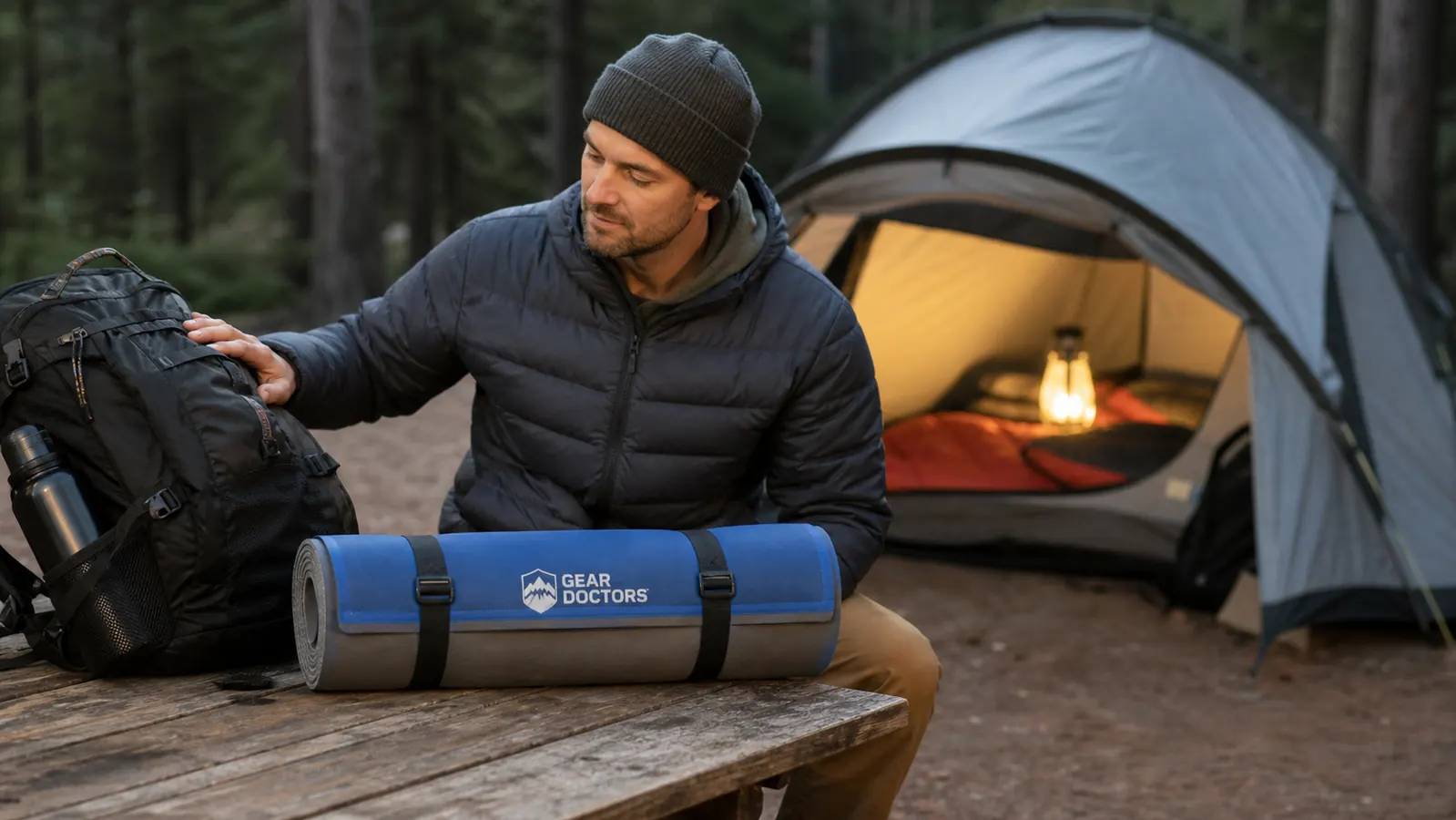
I took the Oxylus on one overnight trip where I was carrying everything on my back. The pad strapped to the outside of my pack with the compression straps, which worked fine on flat ground. On a trail with low-hanging branches, it caught twice and threw my balance. I switched back to a smaller air pad for backpacking trips after that. The Oxylus belongs in a car camping context. If you are shopping for a pad that goes in your pack and on your back, look at lighter inflatable options instead. I have a separate comparison piece covering that decision if you want the full breakdown.
What About Comfort: The Real Question for Side Sleepers
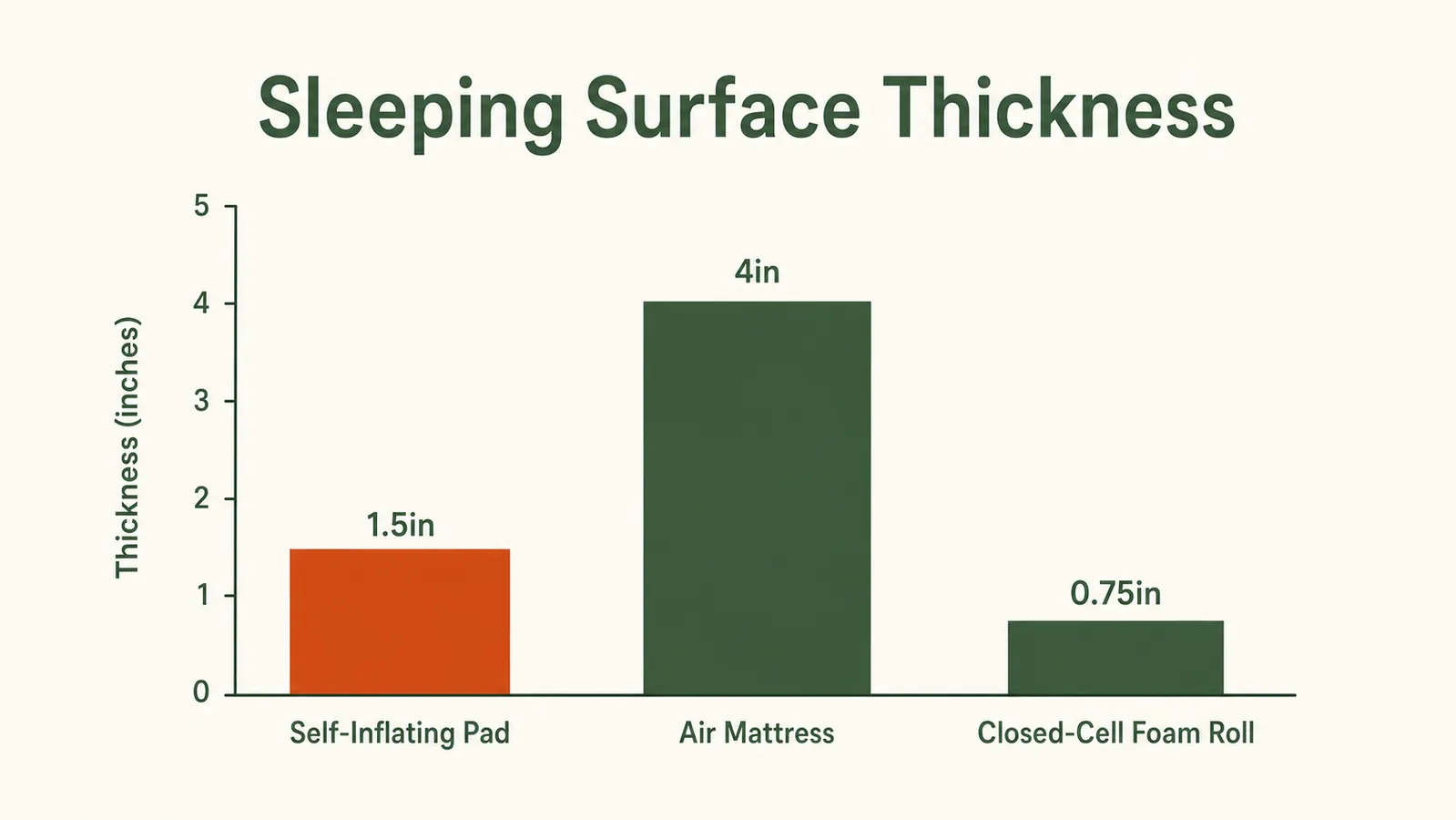
I sleep mostly on my side. At 1.5 inches of loft when new, the Oxylus puts my hip in contact with the ground on firmer tent floors. Not painful, but noticeable. For back sleepers, 1.5 inches is plenty. For dedicated side sleepers who are sensitive to pressure points, you will want a pad with 2 to 2.5 inches of loft or an additional foam layer underneath. The Oxylus is not the right answer for that specific group.
The texture of the sleeping surface is slightly tacky, which is a deliberate design choice to keep your sleeping bag from sliding off. It works. It also means the pad does not slide around in the tent, which I appreciate. But if you sleep warm and tend to move around a lot, the grippy surface can create a slight drag. Minor thing, but I mention it because a few people in my camping group noticed it on their first night.
What I Liked
- R-4.3 insulation is genuinely strong for the price bracket
- Self-inflation takes two to four minutes with no pump required
- Non-slip surface keeps your sleeping bag in place all night
- Light enough at 2.4 pounds to be a reasonable car camping choice
- Available in single and double widths for solo and couples camping
- 4,790 Amazon reviews with a 4.5-star average suggests wide user satisfaction
Where It Falls Short
- Valve shows loosening after sustained use, leading to slow overnight air bleed
- Foam compression is noticeable after 30-plus nights, particularly for heavier users
- Pack size is too large for standard backpacking without external strapping
- 1.5-inch loft is borderline thin for side sleepers on firm ground
- No published maximum user weight, which is a gap for larger adults
- Shell fabric thinner than premium self-inflating pads in the $80-plus range
Who This Is For
If you drive to your campsite, sleep on your back or stomach, weigh under 200 pounds, and are looking for a genuine insulating pad at a price under fifty dollars, the Oxylus is a strong choice. The R-4.3 rating gives you three-season coverage, the self-inflation is convenient, and the non-slip surface is one of those small features you do not appreciate until you have woken up half-off a slippery pad at 2 a.m. This pad fits that use case well.
It also works well as a base pad for a group kit where you need several pads without spending a lot per person. If you run a family or friend group that camps a few times a year, the Oxylus gives each person solid sleep for a reasonable outlay. The durability concerns I raised are real but they are calibrated to sustained heavy use. Occasional-use campers will likely not hit the valve or foam issues within two to three seasons.
Who Should Skip It
Skip the Oxylus if you are a side sleeper who already knows you need extra loft. Skip it if you weigh more than 210 pounds and plan to use it more than a dozen nights. Skip it if backpacking is any part of your plan, because the pack size will frustrate you on trail. And skip it if you need a pad that will be in rotation fifty-plus nights a year, because the valve and foam will start showing wear at a timeline that makes a more durable pad worth the extra spend.
There is also a category of camper who should think carefully: the person upgrading from a bad experience with cheap air mattresses that went flat. The Oxylus is a real step up from a flimsy air mattress, and the foam core means you will not go completely flat overnight. But if the valve slow-bleed I described above sounds like it would bother you, it might be worth spending thirty dollars more for a pad with a more robust valve mechanism and thicker shell fabric.

What the Listing Does Not Tell You: A Quick Summary
The Amazon listing leads with R-4.3 and self-inflation, both of which are accurate. What it does not mention is that the foam density is on the softer side and will compress faster than premium alternatives, that the valve starts loosening around the twenty-cycle mark, and that the rolled pack size positions this firmly as a car camping pad rather than a backpacking pad. None of those are deal-breakers for the right buyer. But they are the things I would have wanted to know before my first trip, not after trip eight.
For context on whether a self-inflating pad is even the right category for your setup versus a car-camping air mattress, I did a full comparison of those two options that goes into the real trade-offs in more depth. And if R-value is the part of this decision you want to dig into further, there is a piece on why the specific number matters more than most listings acknowledge.
If you have read this far, the Oxylus probably fits your use case. Check whether today's price still makes the math work.
It earns its place in a car camping kit. Just go in with clear eyes on the valve and the foam compression timeline, and you will not be disappointed.
Amazon Check Today's Price on Amazon →