
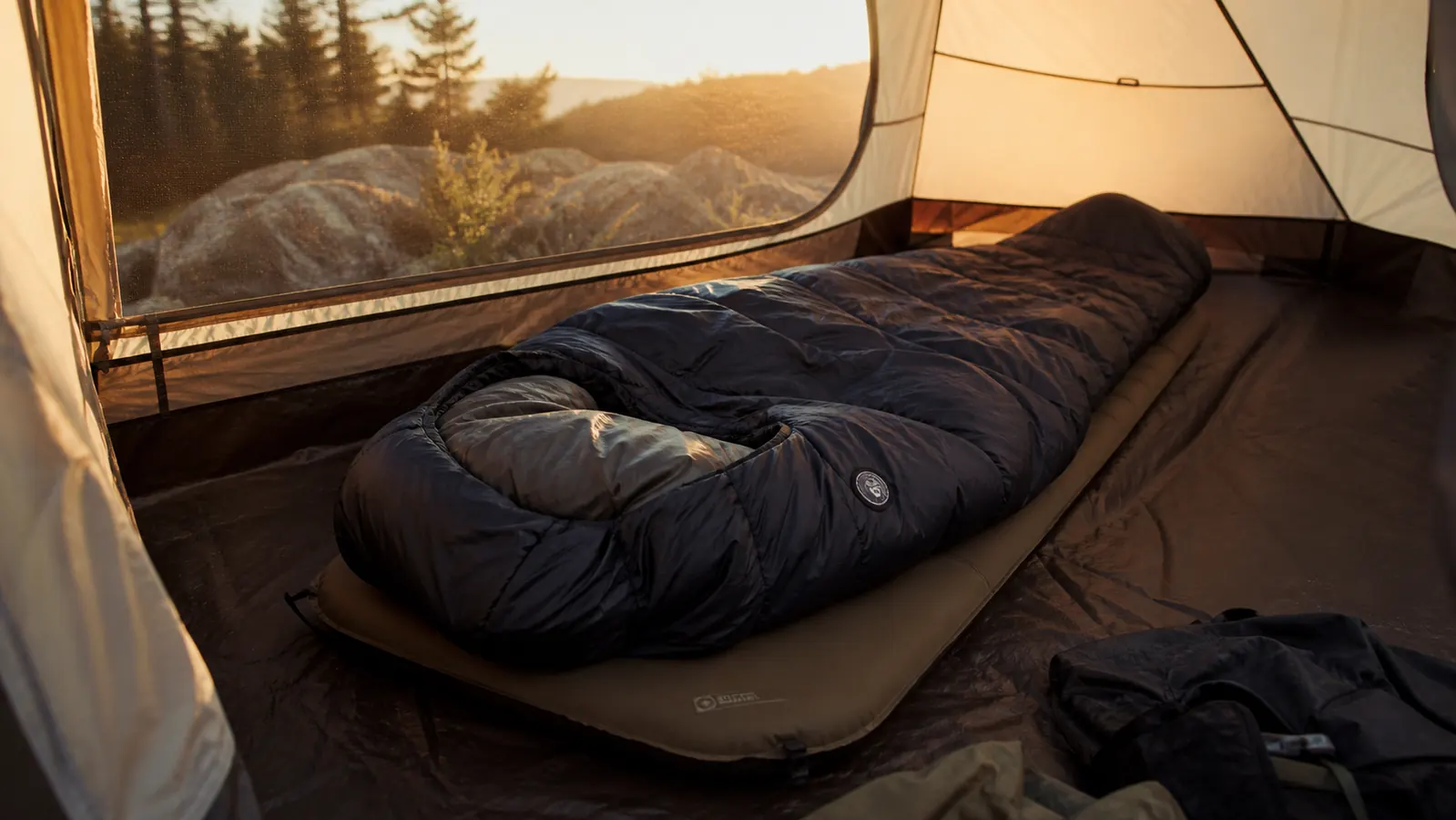
I have woken up cold in the middle of the night more times than I can count, and almost every one of those nights came down to the same thing. Not the sleeping bag. Not the tent. The pad. Ground chill is sneaky. It pulls heat straight out of you from below, and your bag does nothing to stop it because insulation only works when it is lofted. Compressed under your body weight, it is basically just fabric. The pad is the only thing standing between you and the ground, and most people buy the cheapest one they can find. I did that for years. A cheap closed-cell foam rectangle I rolled up and bungeed to my pack, rated around R-1.5. It was fine above 45 degrees. Below that, I would wake up stiff and cold at 3 a.m. and spend the rest of the night shuffling around trying to get warm. Last spring I switched to the Gear Doctors Oxylus, a self-inflating foam pad with an R-4.3 rating that runs around $44. I have now slept on it across two seasons: a wet April weekend at about 38 degrees overnight and a cold October trip that dropped to 29. Here is what I found.
The Quick Verdict
Genuine R-4.3 insulation at a price that makes the upgrade a no-brainer for three-season campers, with minor trade-offs in thickness and pack size.
Amazon Check Today's Price →Still waking up cold at 3 a.m.? The ground is the problem, not your bag.
The Gear Doctors Oxylus puts R-4.3 insulation under you for about $44. Check the current price on Amazon before the next camping weekend.
Amazon Check Today's Price on Amazon →How I've Used It
My first real test was a three-night trip to a dispersed campsite in the Cascades in mid-April. Overnight temps sat between 36 and 40 degrees across all three nights. Ground was damp from snowmelt. I was in my 20-degree synthetic bag, which runs warm, so I figured the pad would be the variable. I unrolled the Oxylus, opened the valve, and let it self-inflate for about four minutes, then gave it two or three top-off breaths to firm it up. The foam core expands on its own to about 70 to 75 percent; the last bit of firmness requires manual inflation. That is standard for self-inflating pads. I slept all three nights without waking up cold. That alone put it ahead of my old foam pad.
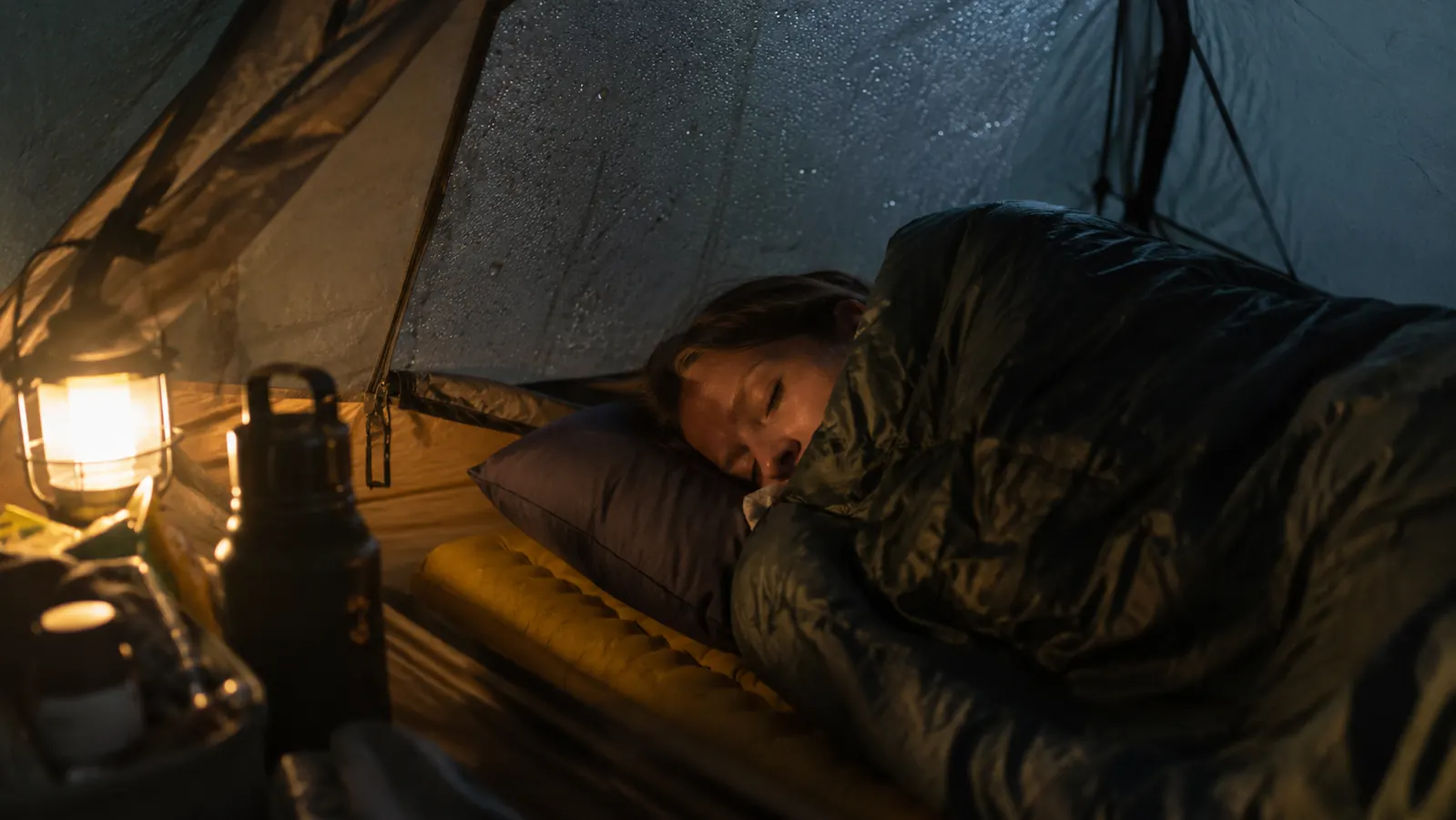
The October test was harder. I camped with my friend Dan at a site in the Oregon Coast Range. Clear skies, no wind, which meant the temperature dropped fast after sunset. We hit 29 degrees by 4 a.m. I was in the same 20-degree bag. I slept until about 5:30, which for me in those conditions is a win. The ground contact felt genuinely insulated rather than just cushioned. I did not detect cold spots coming through the pad at any point in the night. Dan was on a cheap air mattress and woke up at 2. His words, not mine: 'it was like sleeping on a bag of ice.'
What R-4.3 Actually Means in Practice
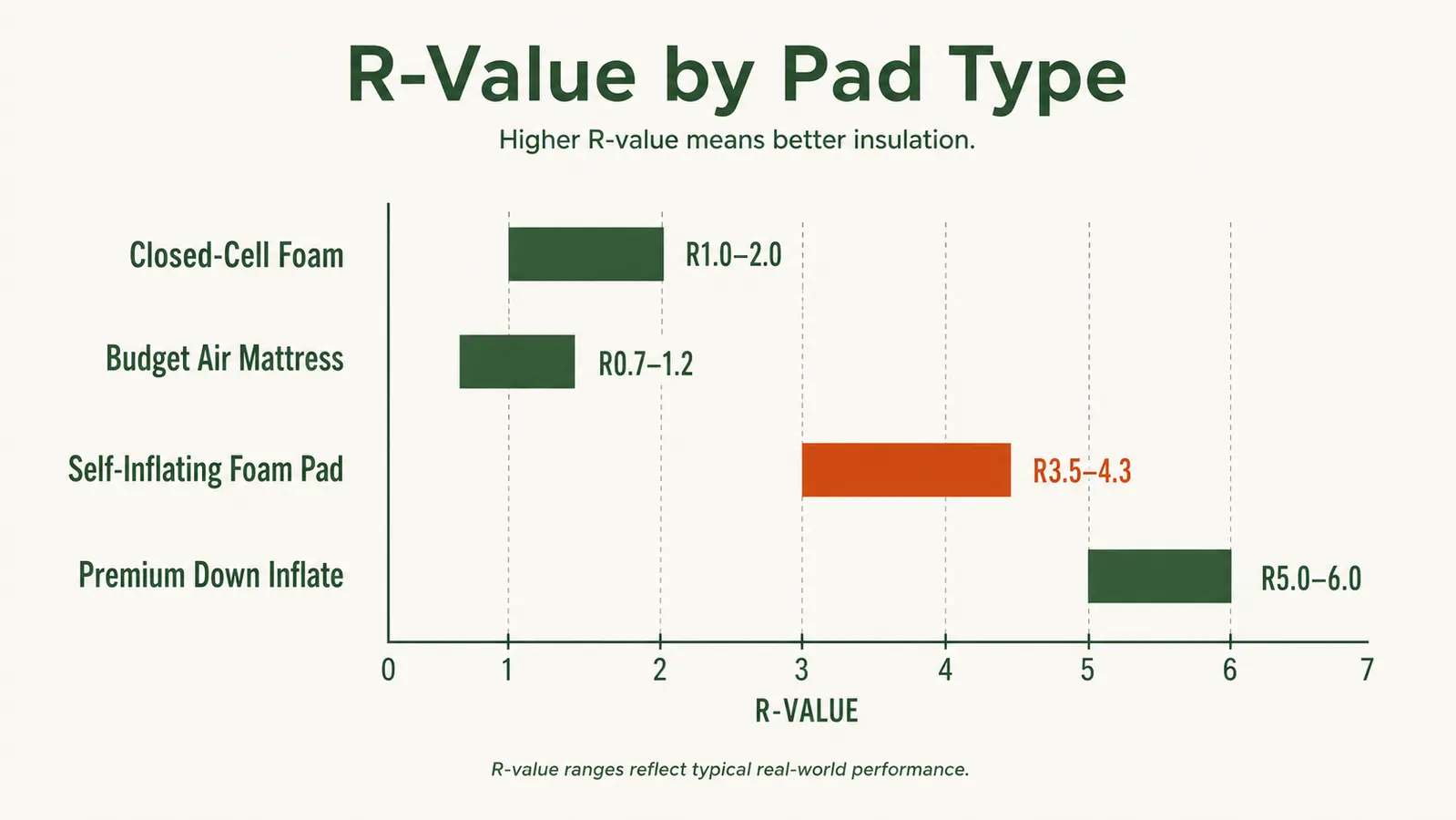
R-value is a measure of thermal resistance. The higher the number, the more the pad resists heat transfer from your body to the ground. A cheap air mattress typically runs R-0.7 to R-1.5. Closed-cell foam pads like the classic blue Ridgerest are R-2.0 to R-2.5 depending on thickness. The Gear Doctors Oxylus claims R-4.3. I cannot test that in a lab, but I can tell you that the difference between this pad and my old R-1.5 foam roll is obvious at temperatures below 40 degrees. It is not subtle.
The R-4.3 rating puts the Oxylus right at the threshold most serious three-season campers target. The rule of thumb I use is R-2 for summer, R-3 to R-4 for spring and fall, and R-5 and above for winter. At R-4.3, this pad covers spring and fall comfortably and handles mild winter nights. It would not be my first choice for a February bivouac in the mountains, but that is not what it is designed for, and it does not claim to be.
Comfort and Thickness
The Oxylus measures 1.5 inches thick when fully inflated. That is enough cushion for sleeping on my side on firm ground, which is how I sleep. I did not feel rocks or root bumps through the pad on either trip. My camping partner Marcus, who is a back sleeper and particular about cushioning, also said it was comfortable enough. He usually brings a thicker pad but left his at home on the October trip and made do without complaint.
The surface material is a smooth-coated nylon. It does not have the tacky texture of some self-inflating pads, which means your sleeping bag can slide around a bit if you move a lot in your sleep. That is a minor complaint and one you can fix with a pad strap or by using a bag liner that grips. It has not been a problem on most nights.
The foam core feels dense and consistent. After two full seasons of use and probably 15 nights on the pad, I have not noticed any dead spots or uneven sections where the foam has packed down. At this price, I expected the foam to compress over time, but so far it has held up.
Dan was on a cheap air mattress and woke up at 2 a.m. His words: 'It was like sleeping on a bag of ice.' I slept until 5:30.
Pack Size and Weight
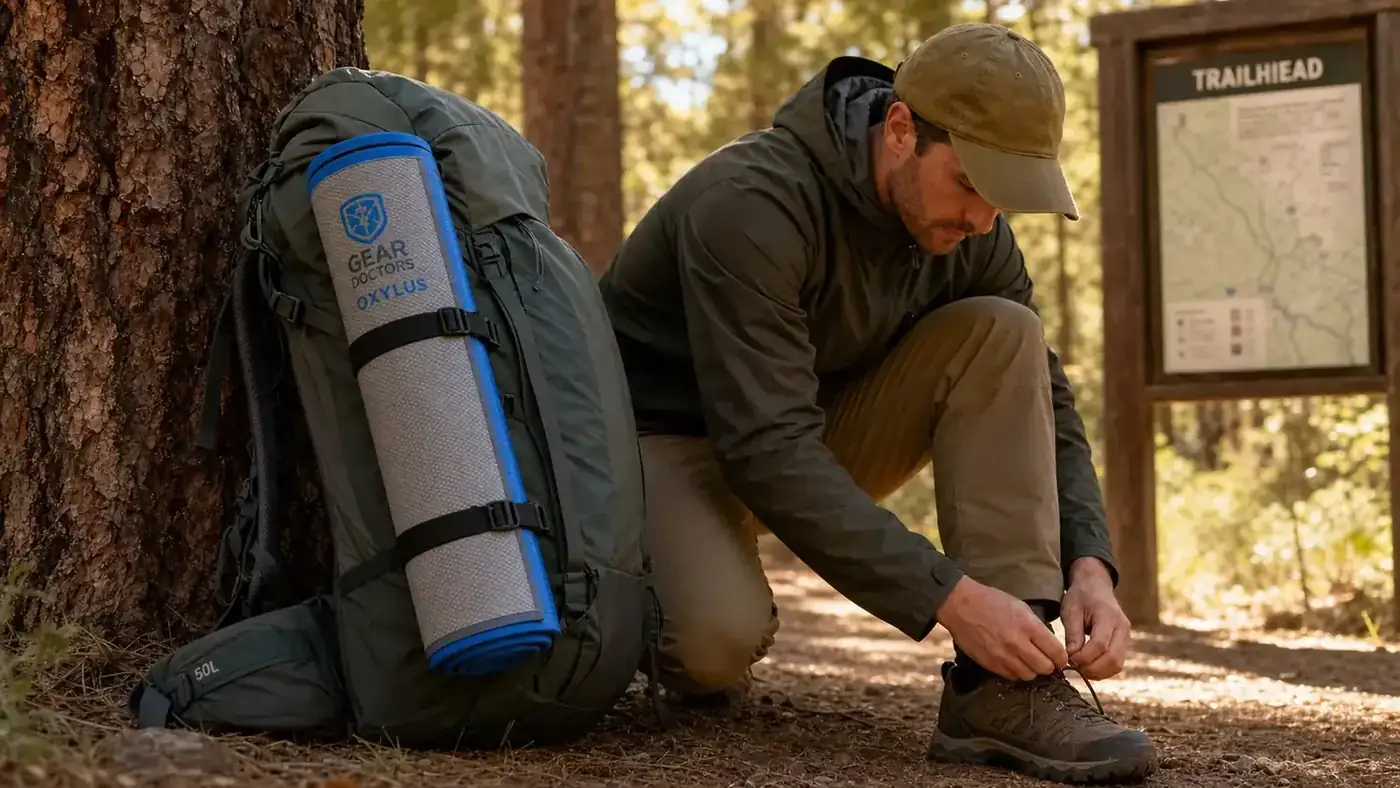
This is where the Oxylus is honest about its trade-offs. Rolled up, it is not small. The pad measures about 10 inches in diameter and around 26 inches long when packed. It does not compress like an air-only pad. It is a self-inflating foam pad, and foam takes up space. I bungee it to the outside of my pack on trips where I need interior room. If you are car camping, it lives in the back of the truck and pack size is irrelevant. If you are trying to fit everything inside a 40-liter bag, you will want to plan around it.
Weight is around 2 pounds 4 ounces for the regular size. Heavier than an ultralight air pad by about a pound, lighter than the big camping air mattresses by two or three pounds. For weekend trips where I am not hiking more than a few miles in, the weight is not a factor. For a long-distance hike, I would want something more packable.
Durability After Two Seasons
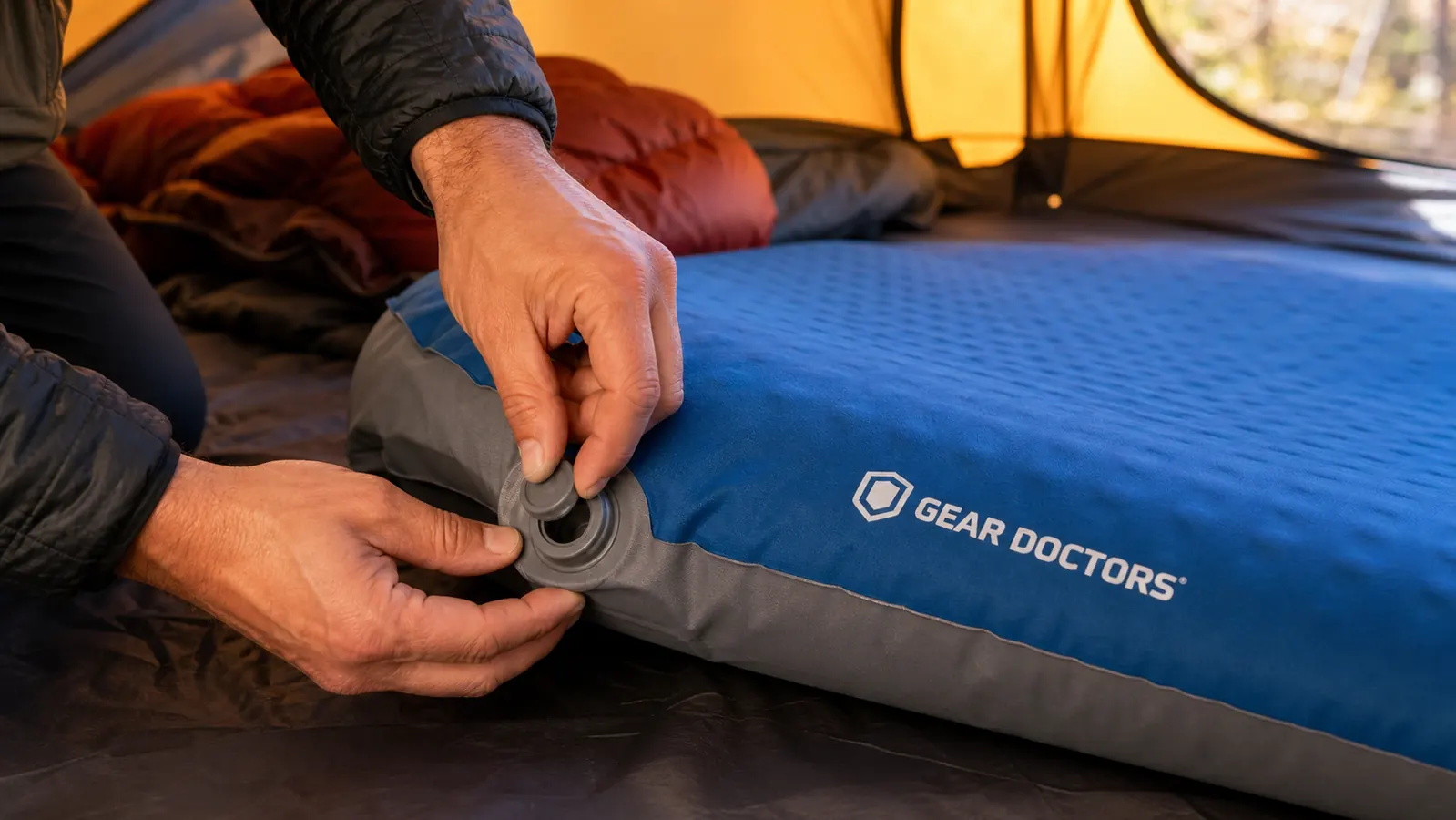
The valve has given me no trouble. It opens and closes cleanly and has not developed any air leak as far as I can tell. I always deflate and roll the pad loosely for storage at home, which helps the foam stay expanded and the valve seal stay healthy. I have not had a puncture, though I have set it up on gravel without a footprint twice and it held up.
The seams and stitching look the same as when I bought the pad. The coating on the sleeping surface has a few scuffs from rough ground but has not peeled or cracked. I would call the build quality solid for the price. I have paid twice this much for pads that showed wear faster.
One thing worth knowing: self-inflating pads should be stored unrolled or loosely rolled, not compressed in a stuff sack. If you jam this into a compression sack for months, the foam loses memory and the self-inflate function degrades. Store it right and it holds up. That is true of every pad in this category, not just the Oxylus.
How It Compares to What I Used Before
My previous setup was a Therm-a-Rest Z-Lite Sol, the accordion-fold closed-cell foam pad. R-value of 2.0. It weighs 14 ounces and packs to almost nothing, which is genuinely useful. The trade-off is that 2.0 R-value just does not cut it below 45 degrees, and the quarter-inch of foam is not comfortable on anything except soft ground. I still use the Z-Lite as a base layer in winter setups stacked under a warmer pad. But for solo three-season trips where I want one pad and a full night of sleep, the Oxylus has replaced it.
The closest comparable self-inflating pad is the Therm-a-Rest Trail Scout, which runs about the same R-value and a bit more money. I have slept on both. The Trail Scout is slightly more comfortable but the price difference is real. If you are outfitting a gear box for a group or a family with kids, the Oxylus makes more sense. If you are buying one pad for yourself and price is secondary, the Trail Scout is a legitimate step up. But the Oxylus is not a step down in any way that matters for most weekend campers.
What I Liked
- R-4.3 insulation is genuine and effective in spring and fall conditions
- Self-inflating foam core is comfortable at 1.5 inches on most ground surfaces
- Valve mechanism has held up without leaks after two seasons
- Price is low enough to buy two for a guest or partner without hesitation
- Works well for car camping and short-haul trips where pack size is not critical
Where It Falls Short
- Rolled pack size is large, roughly 10 by 26 inches, which limits inside-pack storage
- Sleeping bag can slide on the smooth nylon surface during the night
- Requires two to three breath puffs to reach full firmness after self-inflate
- Not suitable as a primary pad for below-freezing winter camping
Who This Is For
The Oxylus is the right pad for the car camper or weekend backpacker who is tired of waking up cold but does not want to spend premium money on an ultralight air pad. If you camp April through November in conditions that include the occasional night below 40 degrees, R-4.3 covers that range reliably. It is also a sensible choice if you are buying pads for a group and need several of them at once. At this price, you can equip three people for what one high-end pad costs. I would also call it a solid upgrade for anyone currently sleeping on a thin foam roll or a cheap inflatable air mattress and wondering why they keep waking up at 3 a.m.
Who Should Skip It
If you are a dedicated lightweight backpacker counting grams and measuring cubic inches of pack space, this pad is not for you. The 2 pounds 4 ounces and 10-inch rolled diameter belong in a car camping kit, not an ultralight frameless pack. Skip it also if you need winter coverage below 20 degrees overnight. And if you are a particularly restless side sleeper who needs two inches or more of cushioning, it might not be enough. There are better options at higher prices for all three of those situations. The Oxylus does not try to be everything.
If you want to dig deeper into how the Oxylus compares to air mattresses and other pad types, I put together a full comparison over at Self-Inflating Pad vs Air Mattress for Camping. And if the R-value question is still nagging at you, my breakdown of 10 Reasons R-Value on Your Sleeping Pad Matters More Than the Price Tag covers the numbers in plain terms.
The ground will not care if you buy a cheaper pad. You will.
The Gear Doctors Oxylus puts real R-4.3 foam insulation under you for around $44. That is a straightforward trade for a full night of sleep in three-season conditions.
Amazon Check Today's Price on Amazon →