
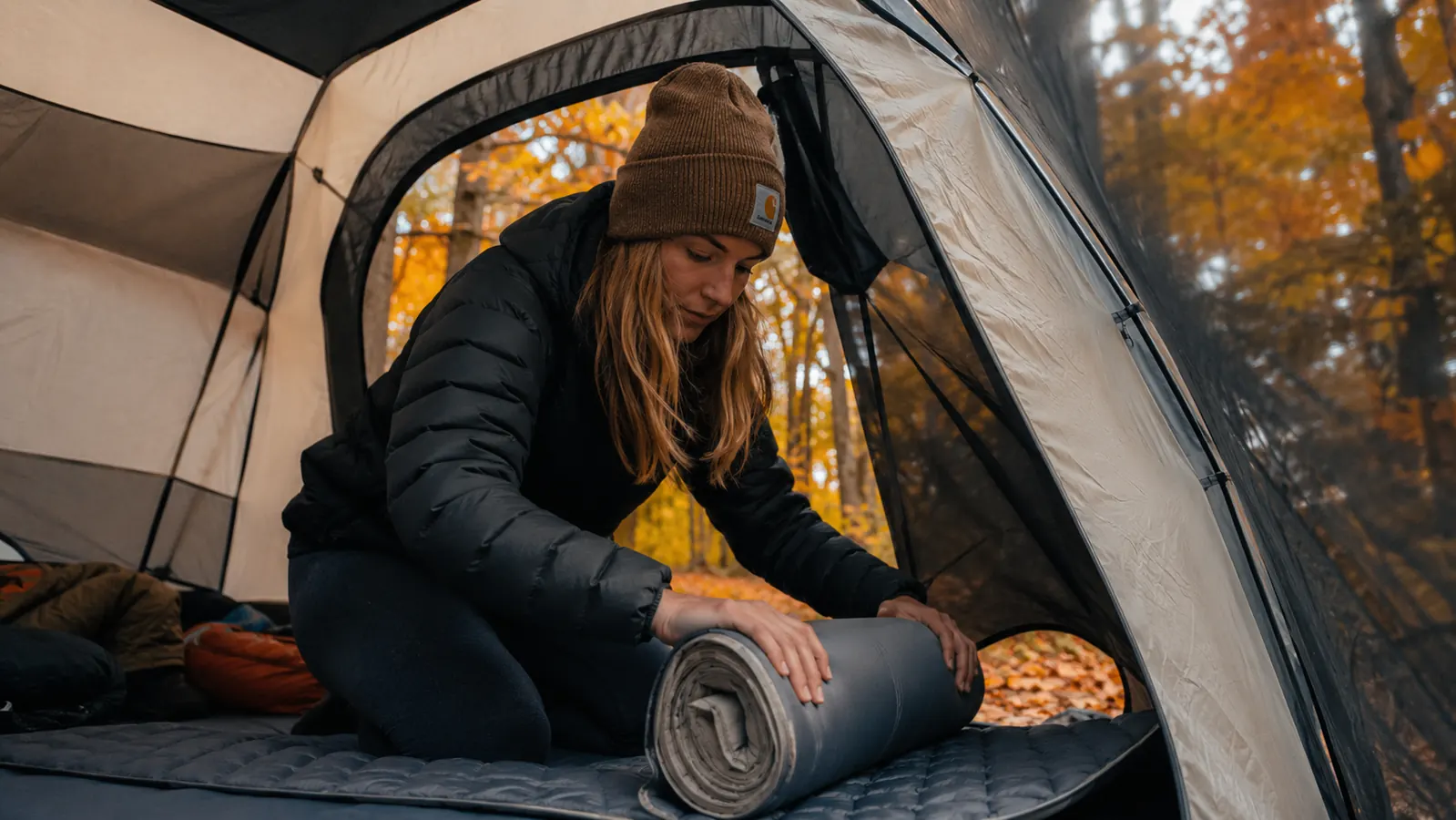
Most people pick a sleeping pad the same way they pick a mattress topper at a hotel gift shop. They squeeze it, check the thickness, look at the price, and move on. The number that actually determines whether you sleep through the night or spend it shivering from 2 a.m. onward is R-value, and most campers have never thought about it for more than ten seconds. R-value measures how well an insulated pad resists the cold conducted up from the ground. The higher the number, the better it blocks ground chill. That is the whole story, and it is worth understanding before your next trip.
I have been leading weekend camping trips for over a decade, logged nights in temperatures from 75 degrees down to the low 20s, and watched more people suffer through bad sleep than I can count. Almost every cold night I have witnessed traces back to an underinsulated pad, not a cheap sleeping bag. Here are the ten reasons R-value deserves your attention before anything else on a pad's spec sheet.
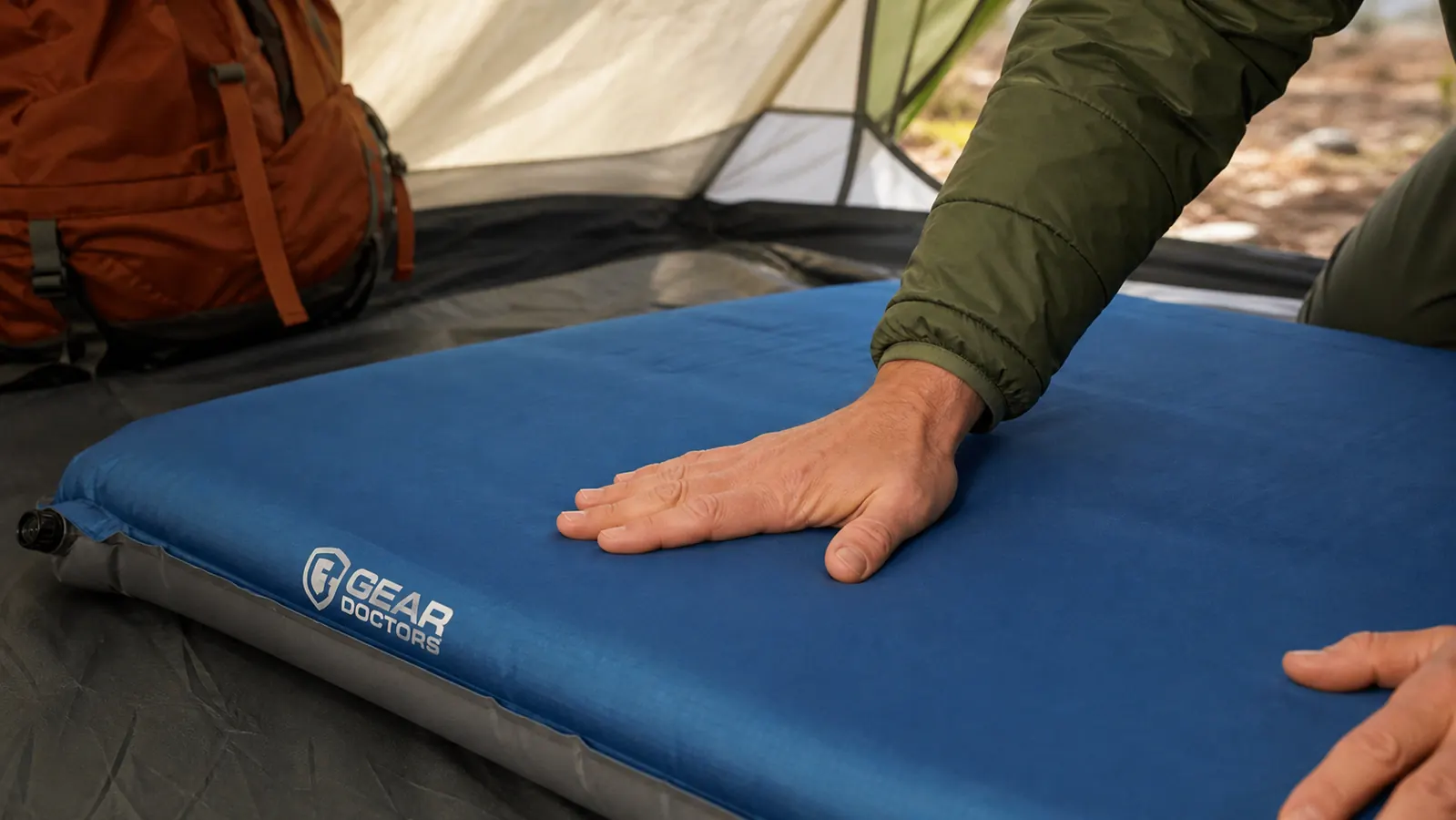
If cold ground has already ruined a trip for you, the Gear Doctors Oxylus at R-4.3 is the fix that costs less than a tank of gas.
Self-inflating foam, R-4.3 rated, 4,790 reviews averaging 4.5 stars. It is the pad Cole carries on every three-season trip. Check today's price before the next sale ends.
Amazon Check Today's Price on Amazon →Ground conducts cold faster than air does
Air is a decent insulator. Cold dirt, rock, and wet grass are not. They pull heat from your body twenty-five times faster than cool air does. Your sleeping bag handles what is above you. The pad is the only thing handling what is below. If the pad's R-value is too low, no sleeping bag rating in the world compensates for the heat escaping straight down into the ground.
Sleeping bag ratings assume an adequate pad underneath
When manufacturers test a sleeping bag's temperature rating, they use a standardized sleeping pad with an R-value around 5.0 underneath. If your pad is R-1.5 and your bag is rated to 20 degrees, the bag is not performing anywhere near that 20-degree promise. You are effectively sleeping in a bag rated 10 to 15 degrees warmer than the conditions you think it handles.
Thickness and R-value are not the same thing
A three-inch air mattress has roughly the same R-value as a one-inch closed-cell foam pad. Maybe R-2 on a good day. The air inside the chamber moves around and transfers heat. Foam cells trap air in place and block that transfer. A half-inch self-inflating foam pad with R-4 will keep you warmer than a four-inch air mattress from the camping section of a big-box store.
Every cold-night camping story I have heard comes back to the same thing: a pad that looked thick enough but had no real R-value behind it.
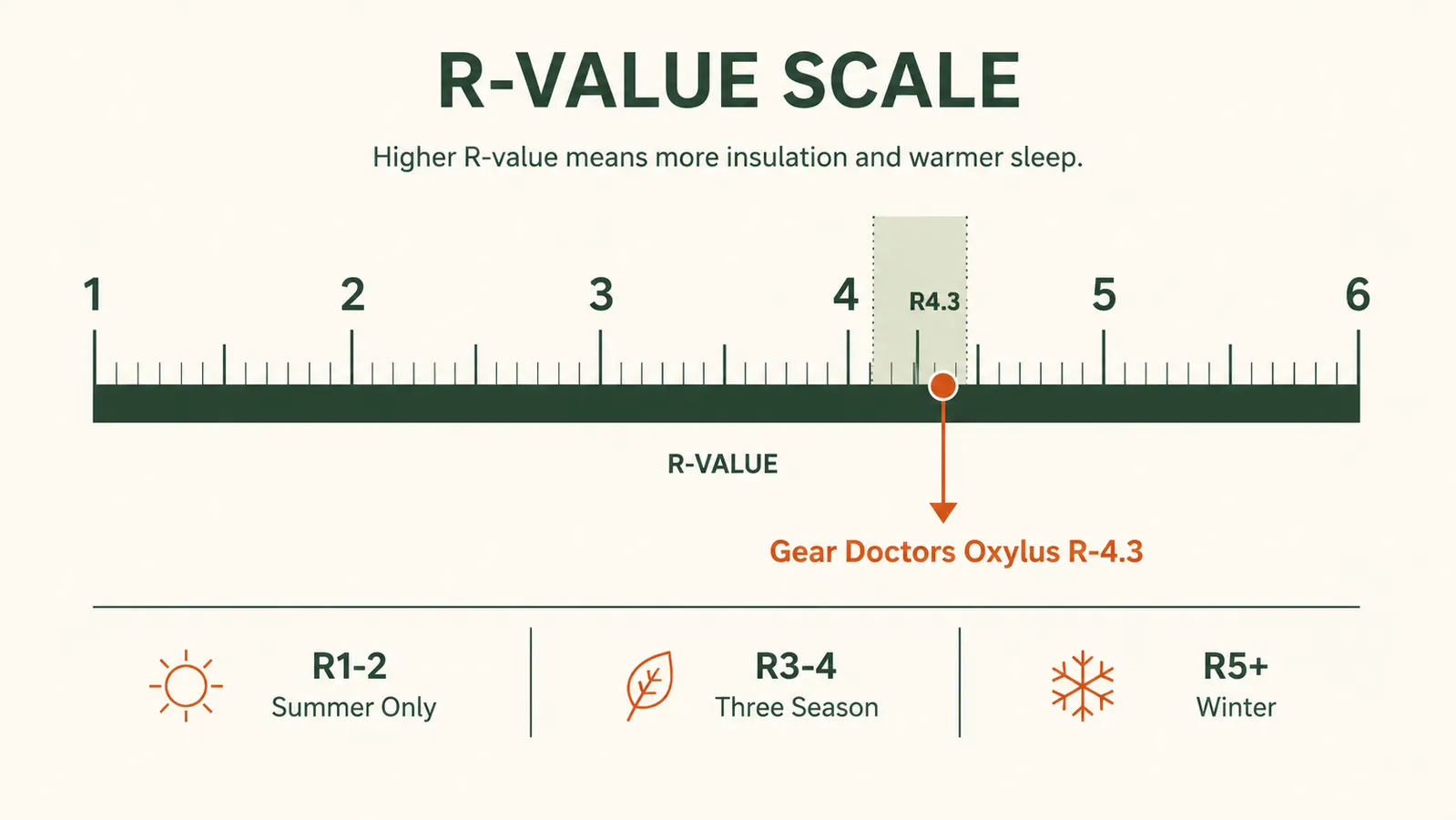
R-4.0 is the practical floor for three-season camping
Spring shoulder season in most of the continental United States means ground temps that drop into the 40s even when the air feels fine. At R-4.0 and above, you have a reasonable buffer against that. Below R-3.0, you are betting on a warm night and hoping the forecast holds. I have lost that bet enough times that I treat R-4.0 as the minimum I will carry on any trip where temperatures could dip below 50 degrees overnight.
Wet ground steals your R-value rating
Standard R-value tests happen in dry lab conditions. At a real campsite, moisture migrates up from wet soil, damp grass, or a tent floor that absorbed rain. Closed-cell foam holds its R-value when wet. Open-cell foam and some air chambers lose insulation efficiency when moisture gets into the system. A pad with a higher starting R-value gives you a safety margin when field conditions are not ideal, which at a campsite they rarely are.
Better R-value means you sleep through the night instead of waking at 3 a.m.
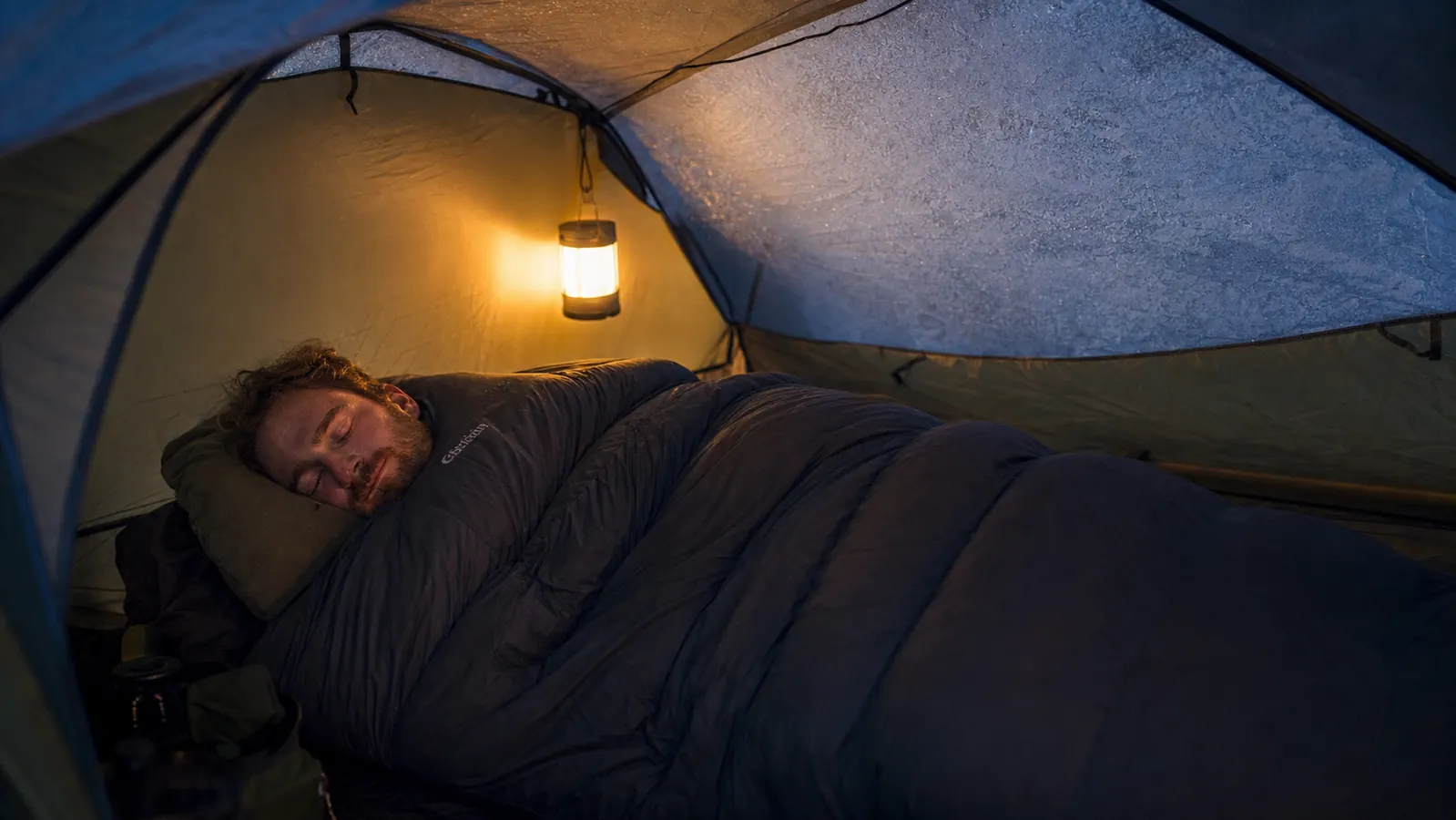
Cold does not always hit you when you get into your bag. It builds slowly. By midnight or 1 a.m., your body has burned through its initial warmth and heat loss through the pad starts to register. The person who wakes up cold at 3 a.m. almost always has a low-R pad. The person who sleeps until the birds wake them up usually has R-4 or better underneath. Sleep quality is the clearest real-world indicator of pad R-value adequacy.
Self-inflating pads combine foam R-value with comfort
The best balance of R-value, weight, and comfort for three-season car camping is the self-inflating foam pad. The foam core provides the insulation. The air chamber provides the comfort and pressure adjustment. A quality self-inflating pad at R-4.0 or above gives you both without forcing you to choose between a warm-but-hard closed-cell mat and a comfortable-but-cold air mattress. That is the category worth shopping in for most weekend campers.
A higher R-value pad extends your camping season by months
With an R-2 pad, your comfortable camping window in most climates is roughly June through August. With an R-4 pad, you can confidently push into April and October, and often beyond. That is four to six additional weekend-worthy months in the calendar. If you camp more than a few times a year, a proper insulated sleeping pad is one of the highest-value investments you can make in the length of your season.
R-value is now standardized so you can actually compare pads across brands
Before 2020, pad manufacturers used their own in-house testing methods, which made R-value comparisons nearly meaningless. ASTM F3340-18 changed that. Any pad tested to that standard uses the same method, so an R-4.3 from one brand and an R-4.3 from another brand now means the same thing. When shopping, look for pads that list ASTM-tested R-values. If a listing just says something vague like "great insulation," that is a reason to keep scrolling.
R-value delivers more sleep improvement per dollar than almost any other gear upgrade
A high-R sleeping pad in the $40 to $60 range costs less than a mid-range headlamp, half a tank of gas, or one night at a cheap motel. And it has a more direct impact on your sleep quality than almost anything else in your kit. I have camped next to people with $300 sleeping bags and $20 air mattresses who were miserable by 2 a.m. I have also camped next to people with modest bags and well-insulated pads who slept like they were at home. The pad wins, almost every time.
What I Would Skip
Basic camp air mattresses marketed as "thick and comfortable" with no R-value listed. If the spec sheet does not show a number and the company does not cite ASTM testing, assume R-2 or less. Those pads work fine in midsummer heat when ground temps stay above 60 degrees. In anything cooler, you will feel the cold climbing up through them before midnight. Thickness without insulation is just a more comfortable way to be cold.
For a closer look at how the Gear Doctors Oxylus performs across spring and fall trips, including how it held up in back-to-back rainy nights in the Pacific Northwest, see the full review linked below. And if you want a broader playbook for staying warm at the campsite beyond just the pad, the guide on how to sleep warm on cold ground covers bag selection, campsite positioning, and layering all in one place.
Thickness tells you how comfortable the pad feels when you lie on it. R-value tells you whether you will still be comfortable at 4 a.m.
Ten reasons, one pad worth buying: the Gear Doctors Oxylus at R-4.3 covers every scenario on this list.
If you want a self-inflating sleeping pad that actually earns its R-value rating in real cold-weather conditions, this is the one I carry. Check today's price on Amazon and read what 4,790 buyers say about it.
Amazon Check Today's Price on Amazon →