
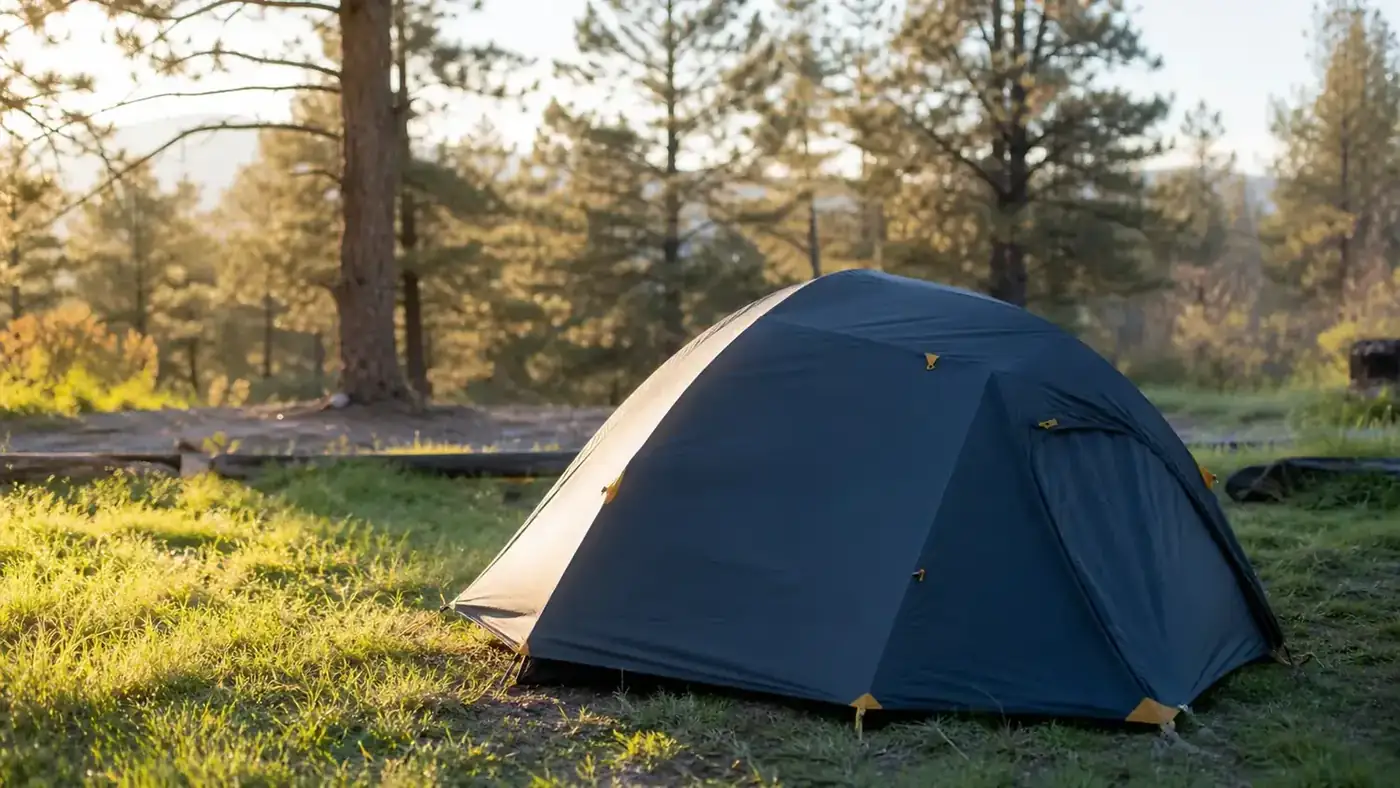
My camping group has a problem that anyone who travels with kids or festival campers will recognize: nobody agrees on a wake-up time, but the sun has its own opinion. For years, I wrote off early risers as a character flaw. Then I started logging the actual culprit. Every campsite from Moab to the Oregon coast, the same script: gray light at 5:10, full tent glow by 5:40, someone rustling at 5:45, everybody awake by 6:00 whether they wanted to be or not. I started testing dark room tents about three seasons ago. The Coleman Sundome Dark Room 4-person tent is the one I kept coming back to after trying a few other options, and it has been my default group tent since.
This review covers long-term use across three seasons: a string of desert car-camping weekends in southern Utah (scorching), two alpine trips above 9,000 feet in Colorado (cold, one significant rainstorm), and a music festival in the Willamette Valley (June, which means rain you were not expecting and sun you did not prepare for). That context matters because a dark room tent that holds up in one setting and fails in another is not actually the answer. I want to tell you specifically where this one delivered and where I still have notes.
The Quick Verdict
The blackout coating is real and works, the footprint is practical for four adults, and the setup is genuinely fast once you know the sequence. It is not bombproof rain gear, and the bathtub floor is thinner than I would like for wet ground. For car camping and festival use at this price, it is the right call.
Amazon Check Today's Price →If the 5 a.m. sun keeps cutting your camping trips short, this is the tent that fixes it.
The Coleman Sundome Dark Room blocks 90 percent of incoming sunlight. Over 2,100 campers have reviewed it on Amazon, with a 4.6-star average. Check current pricing before your next trip.
Amazon Check Today's Price on Amazon →How I Have Used It
Three seasons is enough time to get past the honeymoon phase with any gear. I pitched this tent for the first time on a solo shakedown night in my backyard, then took it directly to a four-day trip at Dead Horse Point in Utah, where temperatures ran from 38 degrees at night to 91 during the day. That heat test was the first useful data point: the dark room coating does slow interior heating in the morning because less sunlight is converting to heat inside the tent. My camp thermometer showed a consistent 8 to 12 degree difference compared to my old standard-fly Coleman at the same time of morning. That gap closed as the day progressed and ambient temperature caught up, but the extra hour or two of cool-dark sleep was exactly what I was after.
The Colorado trips added rain to the picture. One evening storm came in fast at about 11 p.m. and dropped around an inch over two hours. The fly performed without any seam leakage at the top seams or poles. The floor is where I noticed the first real limitation: water pooled under the tent (I had not trenched, my fault on that night), and I could feel cold moisture through the bathtub floor at the corner seam. It did not soak through, but it was close enough that I now use a footprint on any site where drainage is uncertain. That is an easy fix, but worth knowing upfront.
The festival weekend was the most honest stress test because festival camping is chaotic in a way backcountry camping is not. You are pitching in the dark on grass that has been compressed by a thousand previous tents, your neighbors are four feet away, and you need to be set up fast. The Sundome went up in about 12 minutes with two people, which was the fastest in our group of six tents. The freestanding design meant I could plant it, stake later, and move it slightly once I confirmed my orientation. That matters when you are trying to sleep in: you want the door facing away from the sun path, and being able to adjust a freestanding tent before staking is genuinely useful.
The Dark Room Feature: What 90 Percent Actually Means
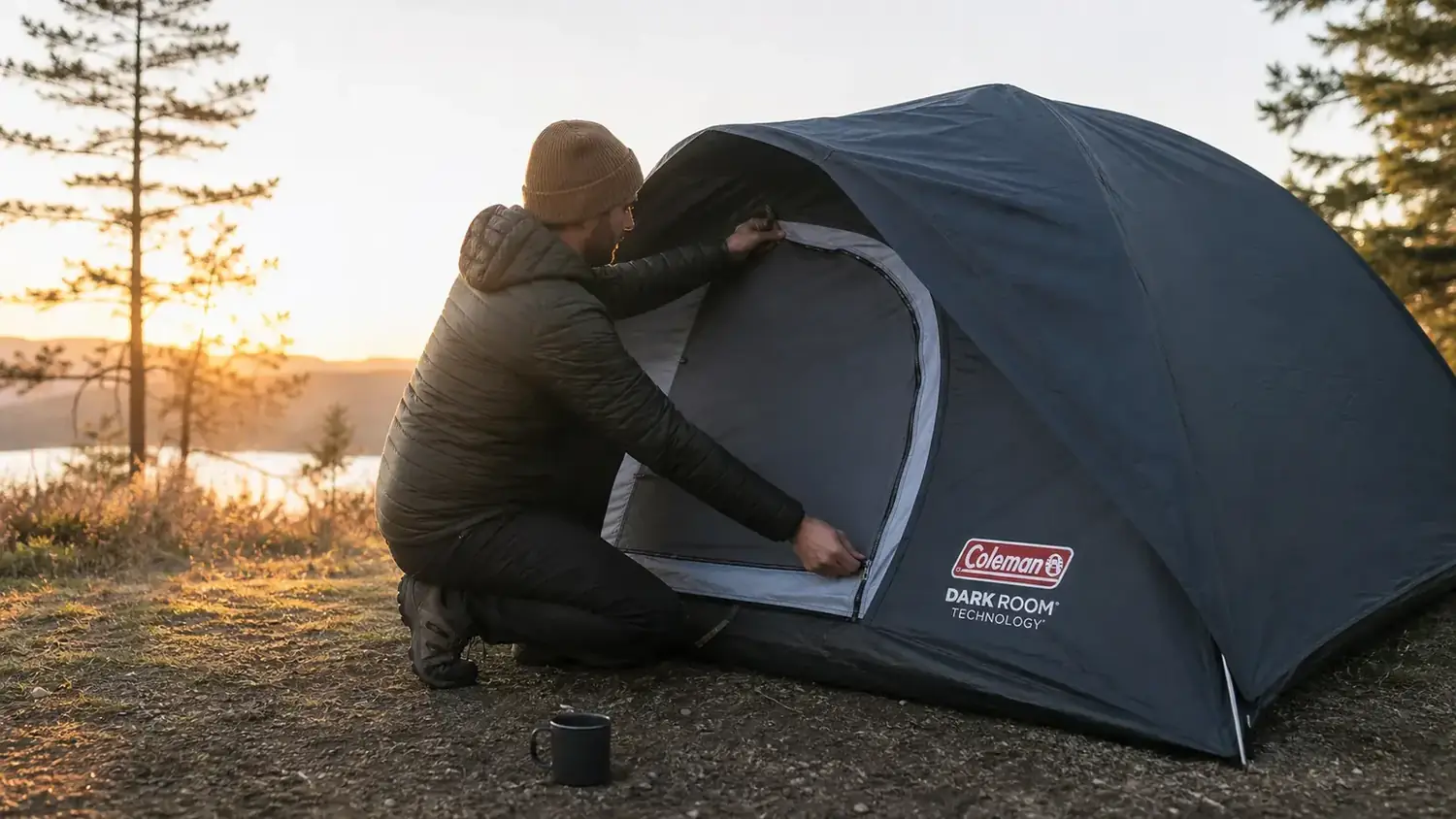
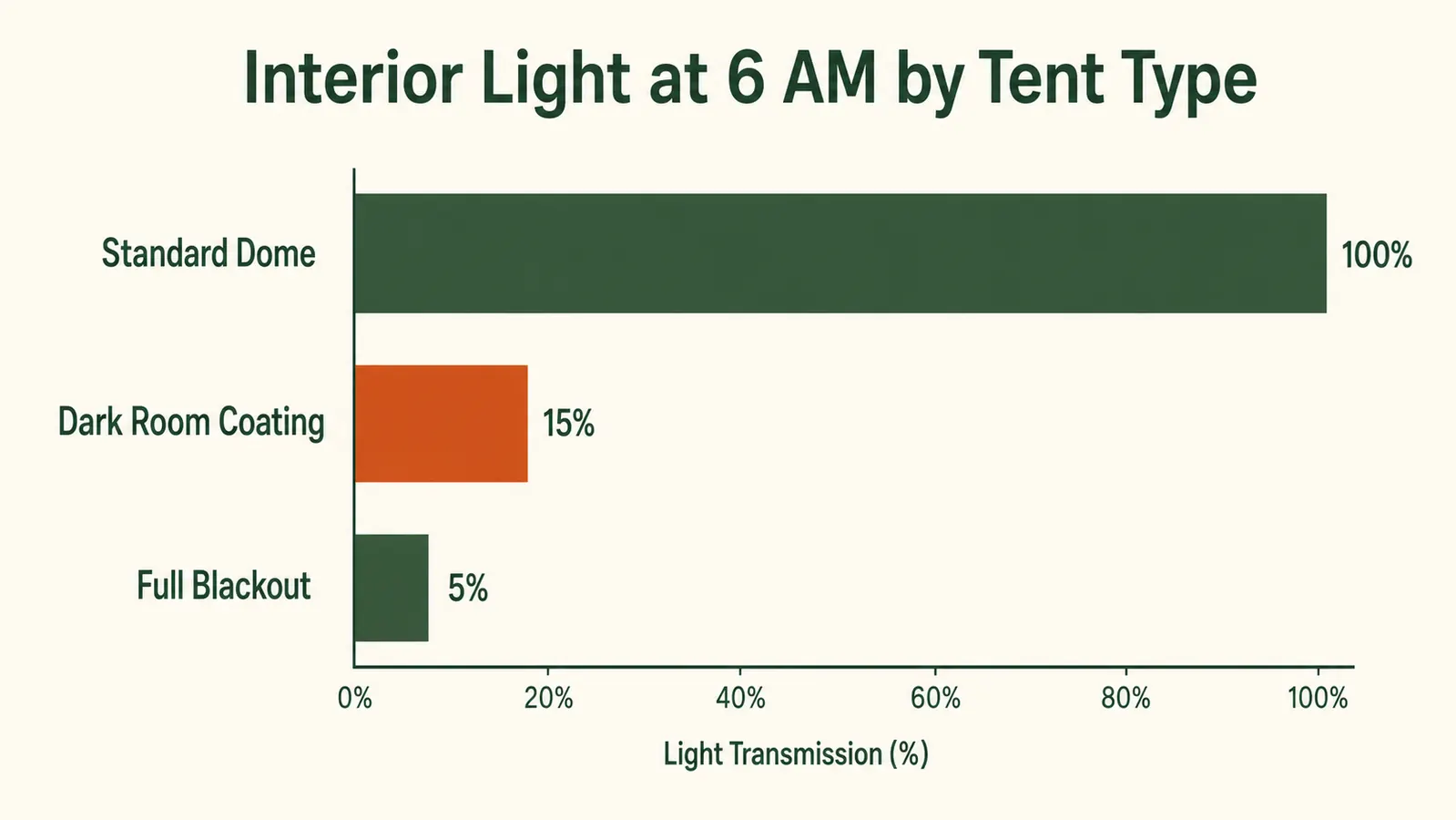
Coleman says this tent blocks 90 percent of sunlight. That number is accurate in the sense that the interior stays genuinely dark, not just dim. At 6:30 a.m. in Utah with the door zipped, I needed a headlamp to find my water bottle. That is the real-world version of the spec. The coating is applied to the fly, not the inner tent walls, so you are relying on the fly to do the work. In conditions where you might pitch without the fly (calm, warm nights where you want stargazing through the mesh canopy), you lose the dark room benefit entirely. That is the obvious caveat, but I have seen people surprised by it.
The practical implication is that the dark room effect also depends on how well the fly drapes. If the fly is not taut, light bleeds in around the base edges, particularly on the door side. Staking the fly corners snugly makes a meaningful difference. With a properly tensioned fly on a flat site, the blackout is convincing. With a loose fly on uneven ground, you will see more morning light than the 10 percent figure suggests. That is a setup discipline issue, not a design failure, but it is something to manage.
At 6:30 in the morning in Utah with the door zipped, I needed a headlamp to find my water bottle. That is what 90 percent light blockage looks like in practice.

Interior Space and Livability for Four Adults
Coleman rates this as a 4-person tent, which is accurate for four people sleeping in sleeping bags with gear stored in the vestibule or outside. If you want four people plus gear inside the tent, it is a tight fit, and someone is going to be sleeping near a wall and brushing condensation in the morning. My practical use case is two adults plus a gear pile, which works very comfortably. For a couple or two friends, this tent has more breathing room than most 4-person specs suggest because the dome shape gives you good head height near the center (about 59 inches at peak) without creating dead zones at the sides.
The gear loft and interior pocket are small but useful. I run a cord between the two overhead attachment points and hang a small lantern there, which lights the whole tent without any hotspots. The single large door and window configuration is fine for one to two occupants; if you are regularly putting three or four adults in and out, you will want the flow of a tent with two doors. That is the biggest functional tradeoff at this price point.
Setup: Faster Than It Looks, Slower Than the Box Claims
Coleman markets this as a fast-pitch tent, and the claim holds after you have done it twice. The shock-corded poles are color-coded, the clips feed quickly, and the freestanding structure goes up before you touch a single stake. My shakedown night took about 20 minutes because I was reading the instructions. By the second trip, I was consistently at 12 to 14 minutes for full setup including fly and stakes on a calm site. Solo setup is possible and I have done it, though attaching the fly alone in any wind above about 10 mph requires patience.
The poles are fiberglass, which is the right call at this price and weight class. Aluminum would be stiffer and lighter, but it would also push the price well past the current range. Fiberglass poles do flex more in wind and carry a small risk of splintering if torqued hard in very cold weather. I have not had a pole failure, but I also do not push this tent into conditions where I would expect one. It is a car camping tent, not a four-season mountaineering shelter, and treating it like one is a setup for disappointment. If you want to read about how it compares head-to-head with a competitor at a different price point, see how it stacks up against the CORE 4-person dome.
Rain Performance and Weatherproofing
The fly is factory seam-taped at the critical stress points and the WeatherTec system holds up well for the rain scenarios a typical car camper encounters: overnight thunderstorms, morning drizzle, a sustained hour of moderate rain. What it is not designed for is a persistent multi-day downpour at a storm campsite. In those conditions, the bathtub floor's seams become the limiting factor. I treat the floor seams with a seam sealer before the first season on any tent in this category, and I recommend the same here. That adds about 20 minutes of prep time and meaningfully extends the life of the tent in wet conditions.
Ventilation is good for a tent that blocks that much light. Two E-port mesh windows plus the fly vent at the top allow enough airflow to manage condensation in moderate conditions. In warm, humid nights with no breeze, you will get some condensation on the inner walls near the base, which is normal for any non-breathable fly. The mesh inner canopy helps move air, but this is not a hot-weather specialist tent. It handles the Pacific Northwest rainy season better than it handles a humid southeast summer.
How the Coating and Materials Hold Up Over Multiple Seasons
After three seasons, the dark room coating on my fly shows no peeling, cracking, or visible degradation. I store the tent dry and loosely rolled, never compression-stuffed, and I air it out after every trip before it goes back in the bag. That basic care routine matters more than people expect. Coleman's dark room coating is not the same as a thin DWR wash that wears off after six trips. It is woven into the fabric structure rather than surface-applied, which is why it holds up better over time than competitors using a simpler surface coating.
The zippers remain smooth and the pole clips have not cracked or lost tension. The stakes that came with the tent are the standard bent-wire type that I replaced immediately with aluminum shepherd's hook stakes, which is something I do on every tent regardless of what ships in the bag. The included stakes are fine for soft ground but will bend on anything harder. The carry bag has held up without any seam separation, which I mention because bag failures on inexpensive tents are common and annoying. Three seasons in, this one is intact. My best estimate is that with normal care, this tent has five or more solid seasons in it for the average car camper. That math against the current price makes the cost per night pretty easy to live with.
What I Liked
- Dark room coating is genuinely effective: headlamp territory at 6:30 a.m. with fly properly tensioned
- Freestanding dome sets up in under 15 minutes once you know the sequence
- Comfortable for two adults plus gear; livable for three on a short trip
- Center peak height of 59 inches means you can sit up without hunching
- Factory seam-taping on the fly holds through normal rain events
- Gear loft hook and E-port for power cable are practical additions
- Coating shows no degradation after three seasons with proper storage and care
Where It Falls Short
- Floor seam should be sealed before first wet-ground use
- Single door limits flow for groups of three or four adults
- Dark room effect degrades noticeably if fly is not staked taut on uneven ground
- Fiberglass poles are adequate but not ideal for high-wind campsites
- No footprint included; you will want one for rocky or wet sites

Who This Is For
This tent is the right answer for weekend car campers who want to sleep past sunrise, families with kids who need a darker interior for nap time on afternoon camp days, festival campers who need fast setup and reliable sun blocking, and couples doing 2 to 4 night trips who want more interior comfort than a tight 2-person tent provides. If you are doing summer camping in the Southwest or Pacific Northwest and your main complaints about previous tents have been waking up too early or sleeping too hot in the morning, this addresses both directly. I also think it is a strong choice for anyone thinking carefully about why your tent choice matters more than most campers think, because the sleep quality argument alone tends to settle the upgrade question fast.
Who Should Skip It
If you regularly camp in exposed, high-wind sites and need a four-season or expedition-grade shelter, this is not your tent. If you consistently put four adults plus gear inside one tent, you will find it tight and should look at a 6-person option with two doors. If you camp primarily in hot, humid southeastern summers with no breeze, the dark room fly does limit ventilation enough that you would be better served by a tent designed specifically for hot-weather airflow. And if budget is no constraint and you want the most bombproof ultralight dome money can buy, the Coleman Sundome is not that tent, though I would argue it punches well above its price for what most car campers actually need.
Here is what three seasons of real use actually tells you this tent is worth.
The Coleman Sundome Dark Room is currently available on Amazon. Over 2,100 verified reviewers agree on the fundamentals: the blackout works, the setup is fast, and it holds in normal rain. Check current pricing and availability before your next trip.
Amazon Check Today's Price on Amazon →