
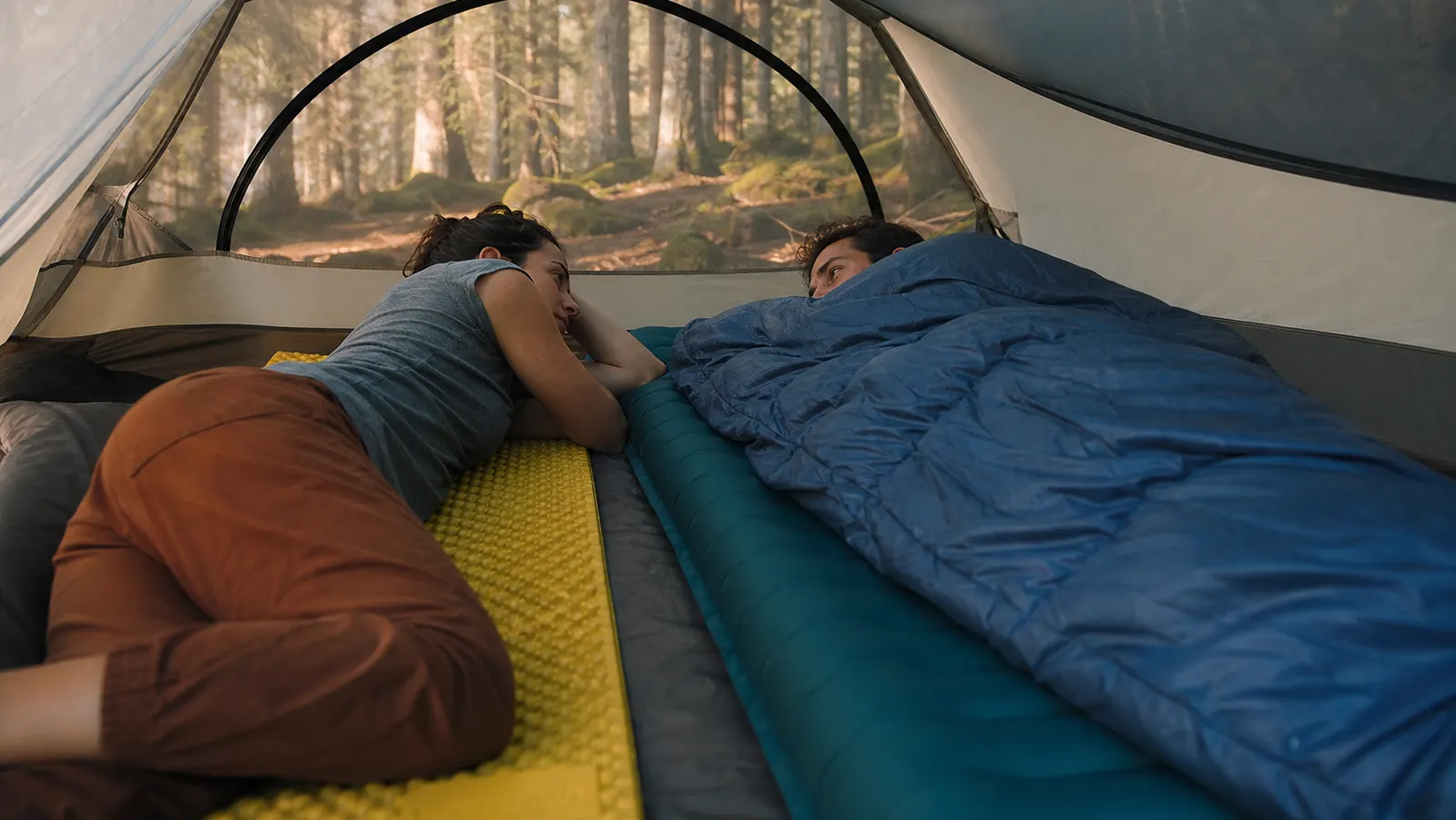
If you wake up cold at 2 a.m. on a car camping trip, nine times out of ten the ground is why. Not your sleeping bag. Not the air temp. The ground is pulling heat out of you from below, and the thing between you and it is not doing its job. Most people who feel this reach for a thicker sleeping bag the next time they shop. The smarter fix is looking down, not up.
The debate between a self-inflating sleeping pad and a camping air mattress comes up constantly in camping forums and gear closets. They look similar, both get you off the ground, and both cost roughly the same money at the entry level. But they do fundamentally different things, and once you understand the difference, the choice gets pretty obvious for most three-season campers. The Gear Doctors Oxylus 4.3 R-Value Self-Inflating Sleeping Pad is what I carry now. Here is why, and when an air mattress still makes sense.
| Gear Doctors Oxylus (Self-Inflating Pad) | Typical Camping Air Mattress | |
|---|---|---|
| R-Value (Insulation) | R-4.3 (three-season capable) | R-0.6 to R-1.0 (minimal insulation) |
| Inflation Method | Self-inflating foam core, top-off by mouth optional | Manual or electric pump required (sold separately) |
| Packed Size | Rolls to roughly 12 x 5 inches with attached strap | Folds to 13 x 9 x 4+ inches, bulky |
| Weight | Approx. 2.2 lbs | 3.5 to 5 lbs plus pump weight |
| Puncture Risk | Low, dense foam core holds shape even if cover is nicked | High, single puncture deflates the whole sleeping surface |
| Warmth on Cold Nights (below 40F) | Solid, foam blocks conductive heat loss effectively | Poor, still air column transfers cold from ground to body |
| Setup Time | 30 seconds, unroll, open valve, walk away | 5 to 10 minutes pumping, longer if pump battery is low |
| Typical Price Range | ~$44 at current price | $25 to $80, plus pump if not included |
| Best Use Case | Three-season car camping, shoulder season, backpacking | Summer car camping, base camping with vehicle power nearby |
Where the Self-Inflating Pad Wins
The biggest thing an air mattress gets wrong is also the least obvious: the air inside it is still air, and still air conducts cold just like the ground beneath it does. That R-0.6 insulation rating on a typical camping air mattress means it barely slows the transfer of ground cold into your body. Sleeping on one at 38 degrees, even in a perfectly rated sleeping bag, can leave you shivering by 3 a.m. because you are essentially lying on a thin layer of cold air above cold ground.
The Gear Doctors Oxylus runs at R-4.3, which puts it in company with pads that cost considerably more. That foam core is doing real work: it physically blocks conductive heat loss from the ground. I have used this pad in late October in the Cascades when overnight temps dipped to 35 degrees, and I stayed warm from below without any extra layering under the bag. That is the actual test that matters.
Setup is also a genuine advantage. Open the valve, unroll it, set it down, and walk away. In five minutes it has inflated itself to a usable firmness. There is no pump to find, no batteries to check, and no fifteen minutes of kneeling in the tent entrance squeezing a foot pump. On a cold, dark arrival at a campsite after a long drive, those five minutes feel like a gift.
Puncture resilience is the underrated one. A camping air mattress with even a small hole becomes unusable by midnight. The foam core in a self-inflating pad still supports you if the outer fabric gets nicked. I have had a small cut in mine for two seasons and it has not affected performance once.
If you have woken up cold at the campsite, the ground is usually why. This pad fixes that.
The Gear Doctors Oxylus brings genuine R-4.3 insulation and self-inflation to a price point that most camping air mattresses do not beat on value. Rated 4.5 stars across nearly 5,000 reviews.
Amazon Check Today's Price on Amazon →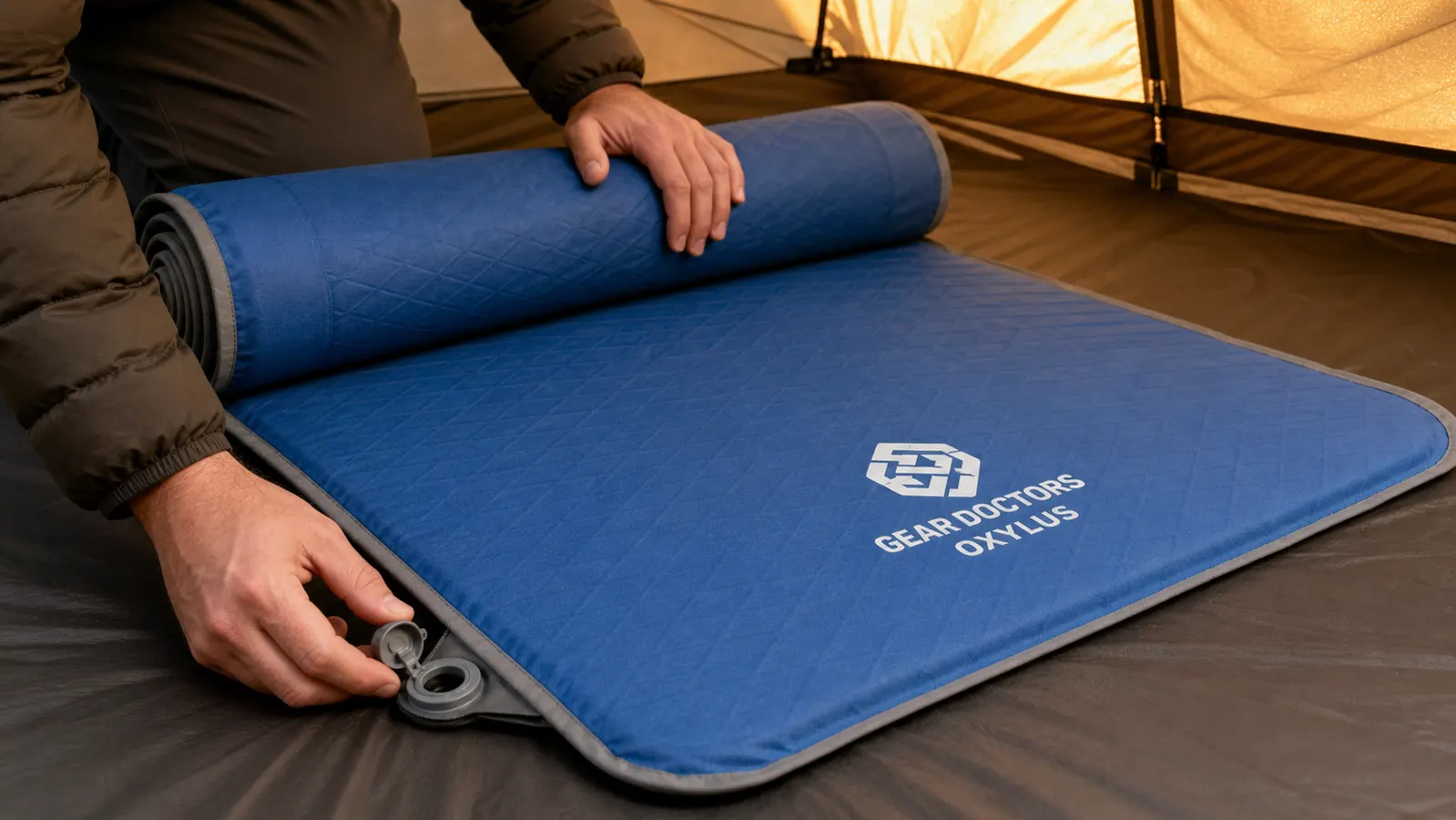
Where the Air Mattress Still Wins
I want to be honest here because an air mattress is genuinely the better choice in specific situations. If you are camping exclusively in summer, with overnight lows above 55 degrees, and sleep quality matters more to you than insulation, a quality double-height air mattress gives you a real bed feel that a self-inflating pad cannot match. The thickness and softness of a good air mattress is closer to what you sleep on at home, and for some people that comfort difference is decisive.
Air mattresses also scale more easily for two people. A queen-size camping air mattress fits two adults comfortably, and the cost per sleeping surface is lower than buying two separate pads. If you have an SUV with a dedicated camping setup and a powered pump that runs off the vehicle, the inflation hassle almost disappears. Base camping with a full kit and a flat, grassy site in July is about the best possible environment for an air mattress.
The question is not which one feels more like your bed at home. It is which one keeps you warm and takes up less space in the car. For three-season camping, those two answers point the same direction.
The Insulation Number That Most Campers Ignore
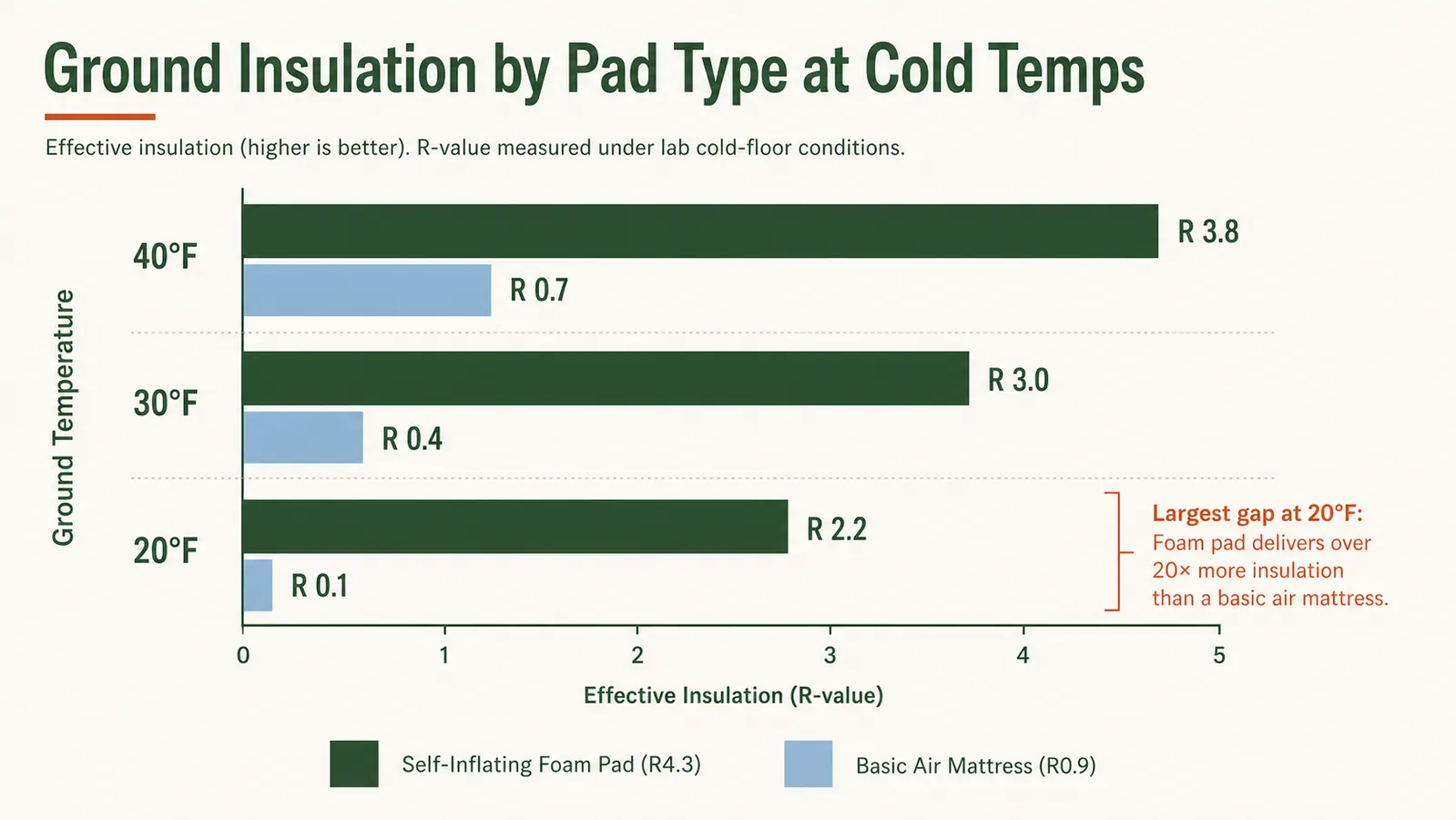
R-value is the single most important number on a sleeping pad, and almost nobody looks at it when buying. It measures thermal resistance: how well the pad slows the transfer of ground cold to your body. An R-value of 2 is adequate for summer. Three-season camping in conditions that dip below 40 degrees needs at least R-3.5, and the Gear Doctors Oxylus at R-4.3 clears that with room to spare.
A typical camping air mattress sits between R-0.6 and R-1.0. That is not a minor shortfall. On a cold night, the difference between R-1 and R-4.3 is the difference between waking up every hour and sleeping through until your alarm. The camping air mattress feels comfortable when you lie down on it in your living room. The self-inflating pad reveals its advantage at 3 a.m. when the ground is 35 degrees and pulling heat through anything it can.
The Gear Doctors Oxylus earns its 4.5-star rating from nearly 4,800 reviewers in part because people who bought it expecting basic comfort got real insulation performance they did not expect at this price. That is a meaningful signal. It is the same foam-core self-inflating design used in pads that cost twice as much, and the R-value holds up across repeated use.
Pack Size and Trip Logistics
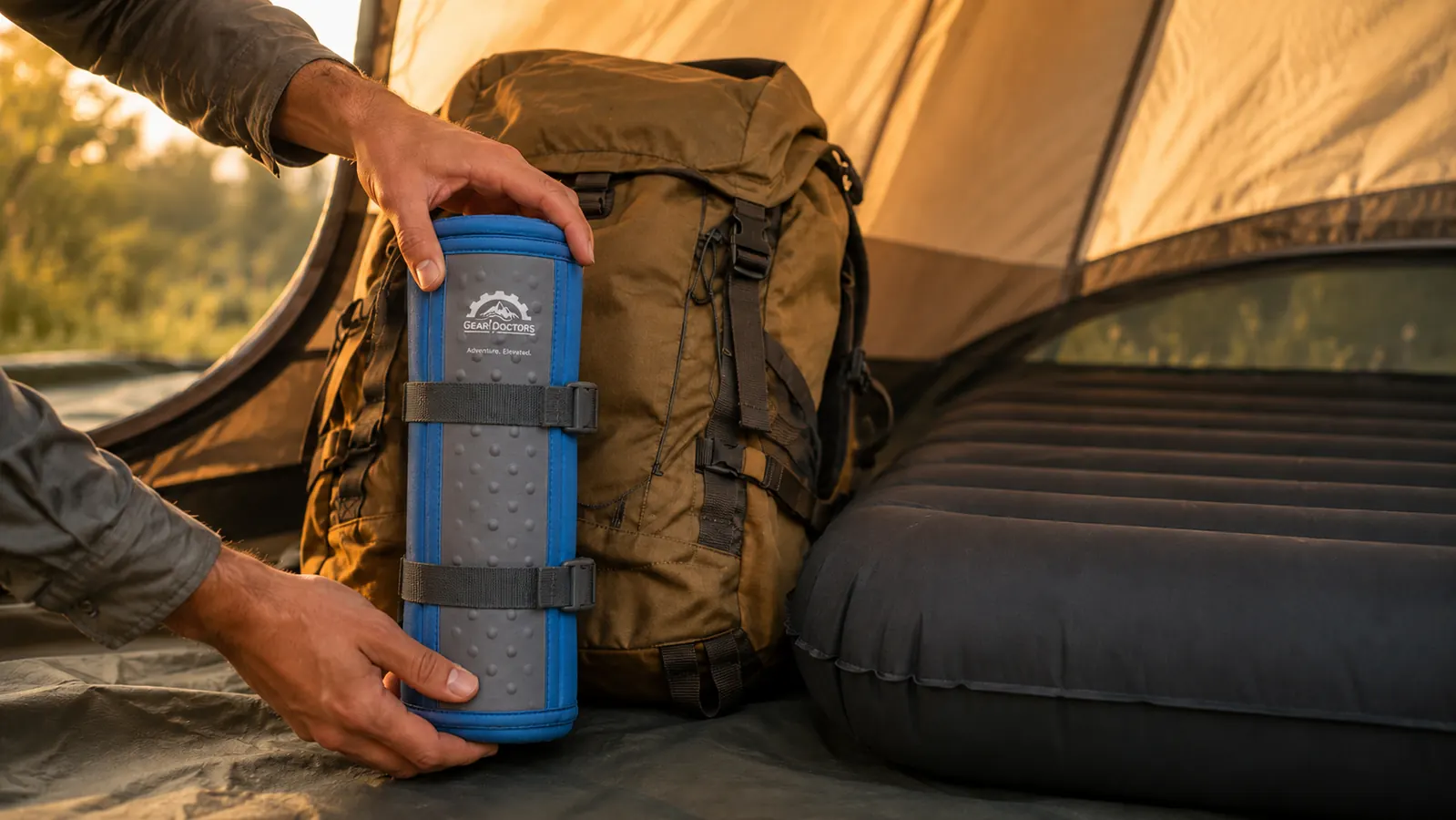
For car camping this matters less than it does for backpacking, but pack size still affects how smoothly a trip comes together. A camping air mattress, deflated and folded, takes up roughly the space of a small carry-on suitcase. Two of them in the back of a car and you have eaten a significant slice of cargo space, and that is before the pump, which you will definitely forget once. The Oxylus rolls down to about 12 inches long and 5 inches wide and straps closed. It rides on top of a pack, hangs off a gear bag, or tucks into a corner of the trunk. It does not require its own organizational slot.
Weight is in the same category. If you are doing any amount of foot travel from car to site, which happens on dispersed camping and any site with a long walk-in path, cutting 2 to 3 pounds off your sleep system matters. The Oxylus comes in around 2.2 pounds. A camping air mattress with its pump can run 5 to 6 pounds total. On a group trip with five people making multiple carry loads from parking lot to site, that difference adds up.
Who Should Buy the Self-Inflating Pad
If you camp in any shoulder season, if your campsite gets overnight lows below 50 degrees even occasionally, or if you want one sleeping surface that handles everything from summer trips to October weekends without rethinking your kit, the Gear Doctors Oxylus is the straightforward answer. It is also the right choice if you camp solo, if you are building a lean car camping kit without a lot of storage to spare, or if you want to avoid the combination of pump batteries dying and air mattresses deflating at 2 a.m., both of which I have experienced and neither of which is fun.
Who Should Buy the Air Mattress
A camping air mattress makes the most sense if you and a partner camp exclusively in summer at developed campgrounds with access to power, you prioritize a bed-like feel over insulation performance, and you are not concerned about the extra bulk and setup time. It is also a reasonable choice for families with young kids where the extra soft height keeps smaller sleepers comfortable and the sheer surface area matters more than R-value. Just go in knowing that it will not keep you warm in cold conditions and that a pump and a patch kit belong in the car with it.
The Oxylus has nearly 5,000 reviews and a 4.5-star rating. Most people buying it report sleeping warmer than they expected.
Self-inflates, packs small, and runs at R-4.3 for three-season insulation that a camping air mattress does not come close to matching. Check what it runs today before you buy an air mattress and wish you had.
Amazon Check Today's Price on Amazon →