
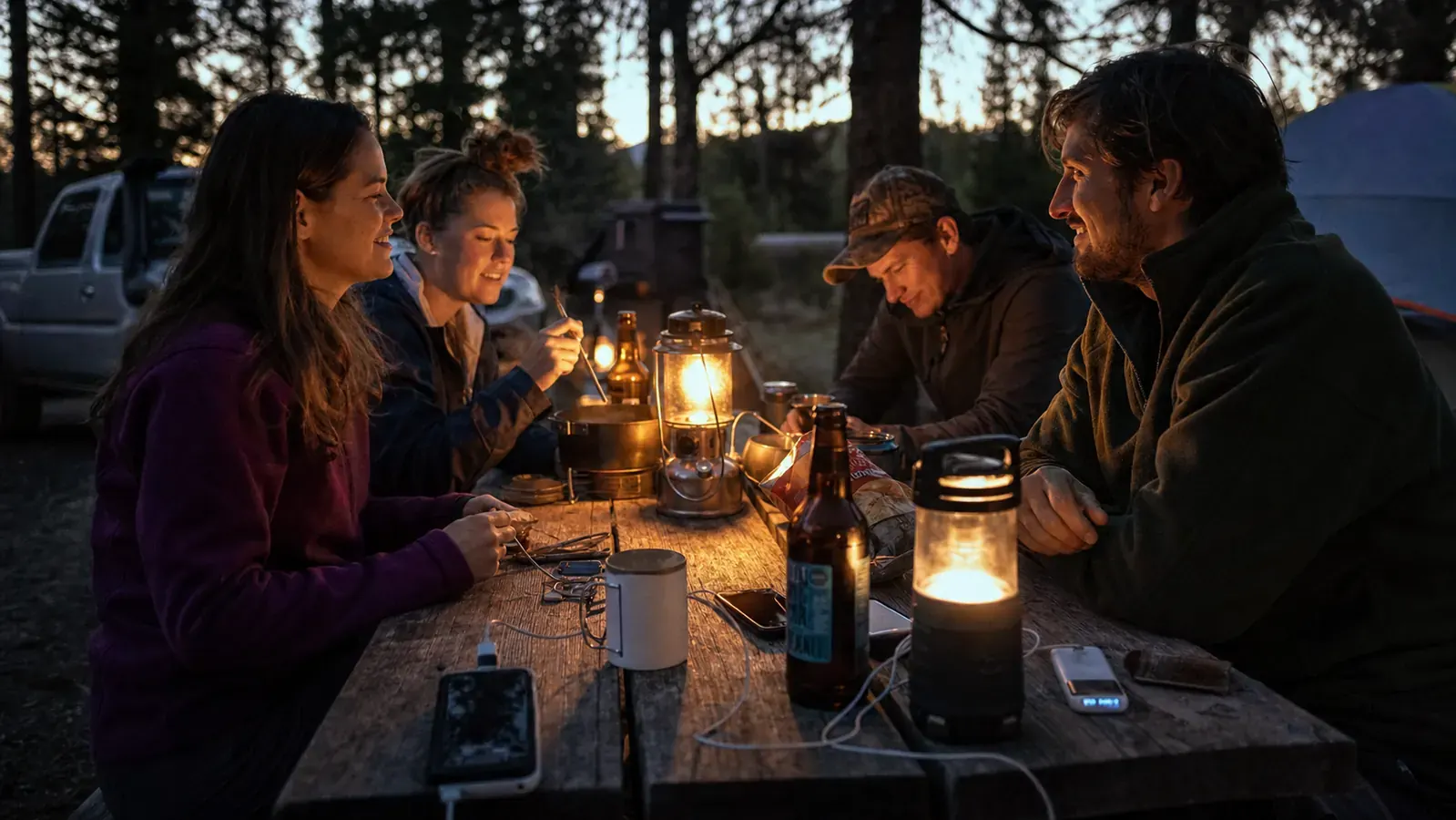
We had been dealing with the charger argument for years. Every group trip, same story: four adults, eight devices, one car outlet, and somebody always convinced their situation was the most urgent. The Jackery Explorer 300 sitting on my tailgate that September morning was the thing I almost did not pack, and it turned out to be the one piece of gear that quietly ended the whole argument. Marcus needed his phone for the trail maps. Dana needed hers to check on her kids back home. I had a CPAP I was nursing off a cigarette-lighter adapter and crossing my fingers every night. And my buddy Seth just wanted to watch a movie at the end of a long hiking day without being made to feel guilty about it. Nobody was wrong. Everyone was annoyed. It was the kind of low-grade friction that makes a four-day trip feel longer than it is.
We tried a few workarounds over the years. A small solar trickle charger that worked fine if you left a phone face-up in direct sunlight for six hours. An extra car battery that got heavy fast and required running the engine to charge anything meaningful. Rationing screen time, which sounds reasonable until you are tired at 9 PM and your phone is at 12 percent. None of it solved the problem. It just moved it around.
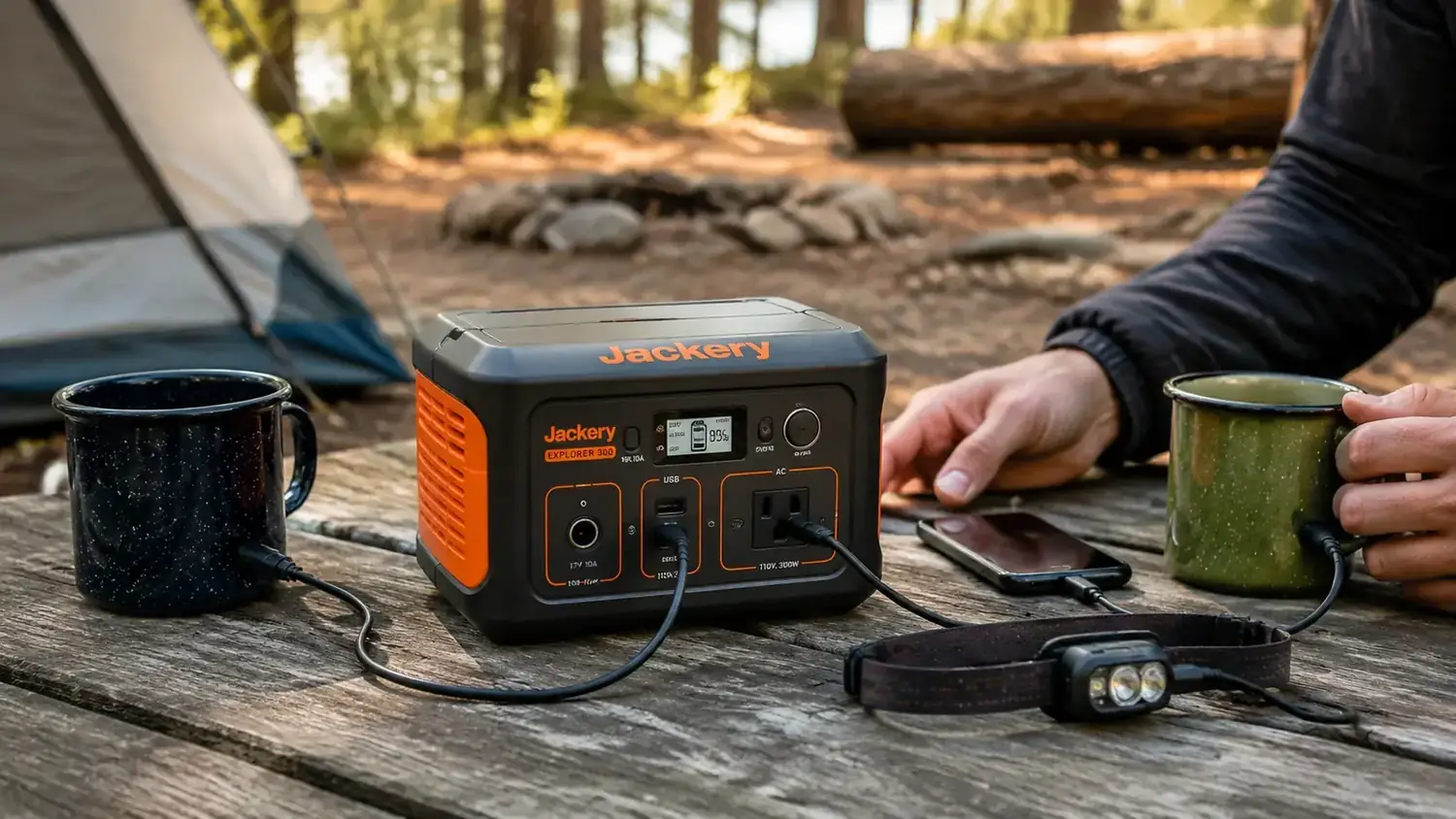
The summer before last, I showed up to our September trip with a compact power station that fit in the bottom of my pack with room to spare. 6.4 pounds. About the size of a thick hardcover book. I had done the capacity math beforehand and it added up reasonably well on paper, but I had no idea if it would hold up across four full days in practice.
Nobody asked about charging after the first morning. That was the first time that had happened on a group trip in years.
I set it on the picnic table the first evening and said: plug in, no rotation, no schedule. Everyone looked a little skeptical. By the next morning, every phone was full. The camp light had run all night. My CPAP had made it through without complaint. Seth had watched half a movie. Nobody had said a word about it.

The unit we used was the Jackery Explorer 300, 292 watt-hours of LiFePO4 battery packed into something I could carry in one hand. It has a 110V AC outlet, two USB-A ports, a USB-C port, and a DC carport. Plenty of ways to plug in. The display shows remaining capacity as a percentage and gives you a rough time estimate based on current draw, which turned out to be useful. When it read 40 percent on night three, I cut the AC outlet and switched everything to USB-C, and we made it through the last day comfortable. No surprises.
Done rationing phone time at camp? The Explorer 300 runs four people through a full weekend.
292Wh, 6.4 lbs, and multiple output options including a 110V AC outlet. Rated 4.6 stars by more than 11,000 campers on Amazon. Check current pricing and availability.
Amazon Check Today's Price on Amazon →I want to be honest about what it does not do. It is not a whole-camp power solution. Do not expect to run a coffee maker or an electric cooler off this thing for four days. The AC outlet works well for CPAP machines and laptop top-ups, but anything over about 200 watts will chew through the capacity fast. It also charges slowly off the wall, around seven hours from empty to full, so if you have time to plug in before a trip you should. I did not bother with solar on this trip, though the input port supports it.
For what most camping groups actually need, though, it is exactly right. Phones, a headlamp or two, a small speaker, a camp light, a CPAP on the AC side. That list describes probably 90 percent of the charging needs on a typical car-camping or base-camp weekend, and the Explorer 300 handled all of it across four people for four days, with something left in the tank when we broke camp Sunday morning.
What I Would Tell You If We Were Sitting at My Kitchen Table

If you are on the fence about carrying one of these, here is my plain-language take. The charger argument on group trips is not actually about phones. It is about feeling like your comfort matters. When one person controls the only charging outlet, even unintentionally, it creates a small power dynamic that puts everyone slightly on edge. A compact power station removes that entirely. You plug in, you sleep, you wake up with a full battery, and nobody had to manage anything.
The Jackery Explorer 300 weighs less than most people's camp chairs. It fits in the car without displacing anything meaningful. At current pricing it is not a trivial purchase, but compare it to what you would spend on a weekend of camping and it pays for itself in trip quality fast. I have carried it on eight trips since that September. It has not failed me once. I check the battery level the night before I leave, top it off if needed, and toss it in the car. That is the whole routine.
If you want a deeper look at exactly how it handles capacity over a full camping weekend, what it competes with, and where it falls short, the full review and the head-to-head comparison with the Goal Zero Yeti 200X are both worth reading before you decide. Either way: if your group trips have a charger problem, this is the gear that solves it.
Carry less charging stress on your next group trip.
The Jackery Explorer 300 runs phones, lights, and a CPAP through a full four-day camping weekend. Over 11,000 Amazon reviewers agree it works. See today's price before heading out.
Amazon Check Today's Price on Amazon →