
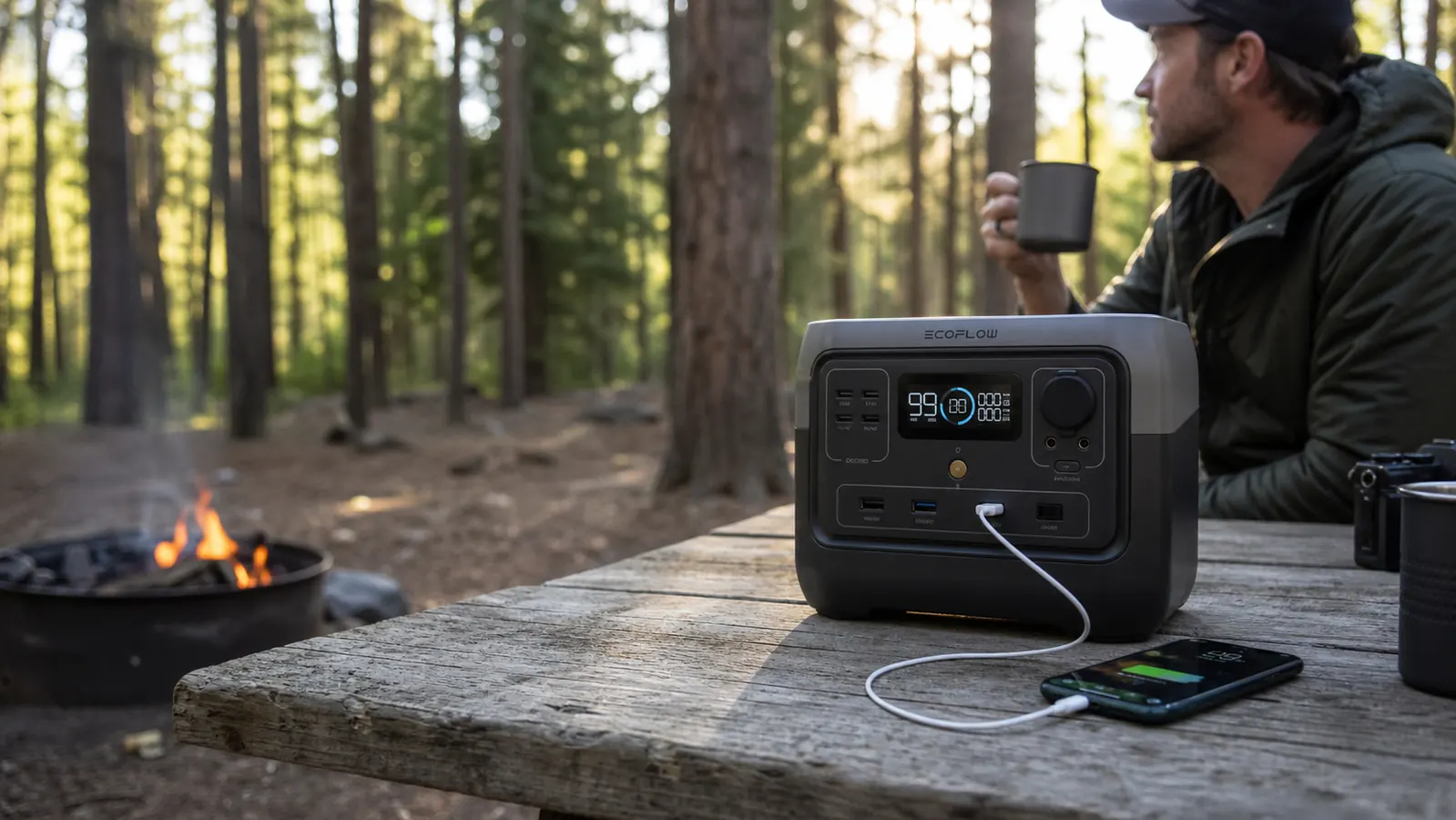
Keeping devices charged at a campsite without an electrical hookup is one of those problems that sounds trivial until your phone dies on night two with a navigation app you actually needed, or someone's CPAP alarm starts beeping at 2 a.m. because the battery is almost gone. A portable power station solves all of it, but only if you show up with a plan.
I've been sorting out campsite power for group trips for years, and the system I run now is straightforward: do the capacity math before you leave, pick the right portable power station for your actual load, add a small solar panel if the trip runs longer than two nights, and prioritize the loads that matter when the watt-hours start running low. Five steps, no generator, no hookup required.
Most campers run out of power because they guessed on capacity. Don't guess.
The Jackery Explorer 300 holds 292Wh and handles phones, fans, lights, and small medical devices through a full camping weekend without a generator or hookup. If you want one unit that covers the whole load, this is the one to check.
Amazon Check Today's Price on Amazon →Step 1: Add Up What You Actually Plan to Run
Before you buy anything or pack anything, write down every device you plan to run and roughly how long you'll use it each day. This sounds tedious, but it takes five minutes and it's the only step that keeps you from underpacking capacity.
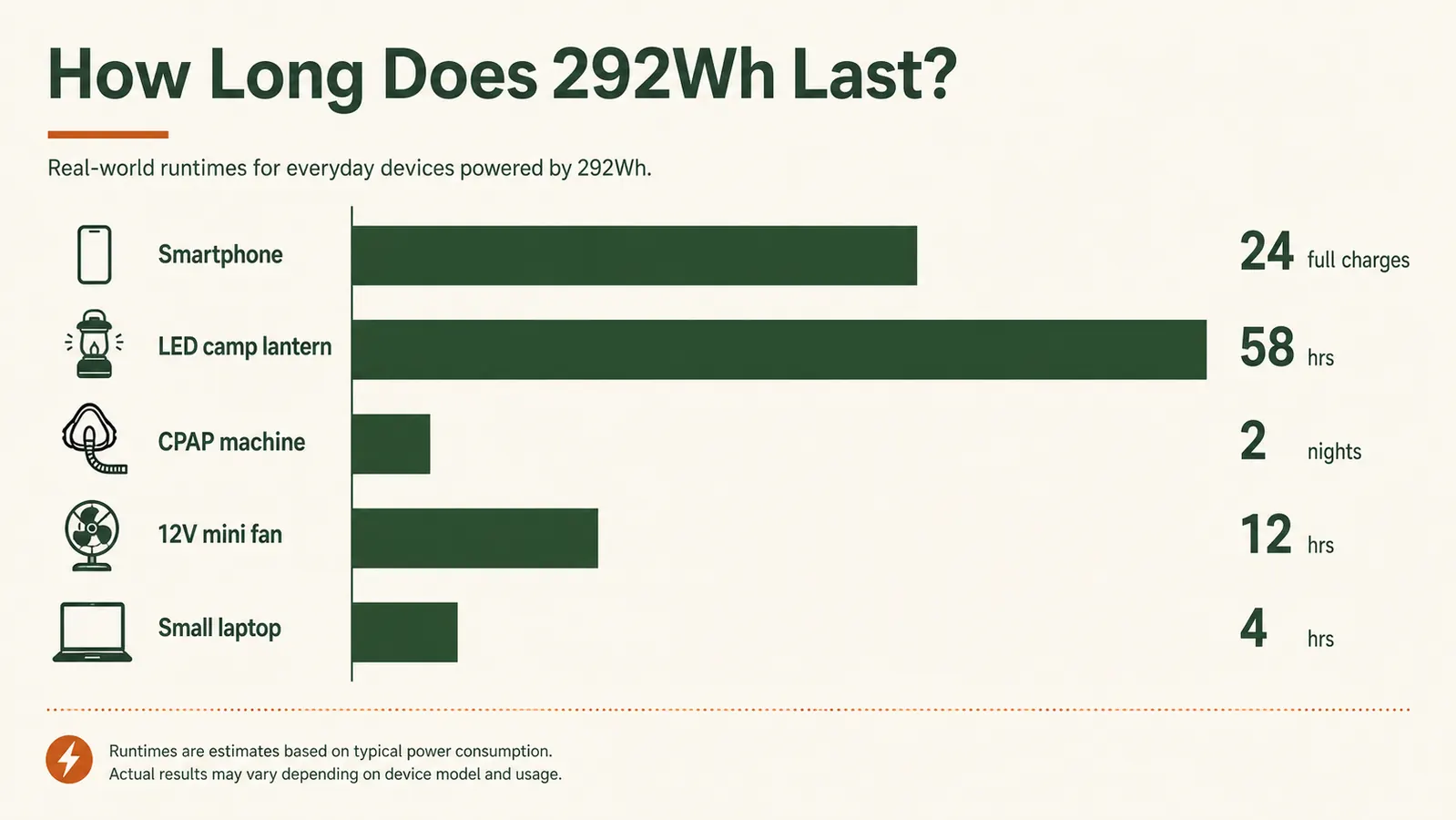
Here's a sample load for a two-person weekend trip: two smartphones at 10-15Wh each per full charge, a small USB LED camp lantern running four hours a night at about 5W (so 20Wh per night), a 10W mini fan running six hours overnight (60Wh per night), and a CPAP without the humidifier at roughly 30-40Wh per night. Add it up over two nights and you're sitting around 200-260Wh total. That's a real number you can match to a unit's capacity, not a guess.
One thing most people miss: the watt-hour rating on a power station is not a ceiling for one night. It's the total stored energy. A 292Wh unit does not mean you can run 292W of gear for one hour and then it's dead. It means you have 292 watt-hours to spread across your whole trip. Small, efficient loads stretch it a long way.
Step 2: Pick a Portable Power Station Sized to Your Load
Once you have your load estimate, you want a battery with at least 20-30% headroom above it. If your math says 200Wh, don't buy a 200Wh unit. The efficiency loss in the inverter (converting DC battery power to AC wall-socket power) costs you around 10-15% right away, and you'll always have an unplanned charge or an extra day.
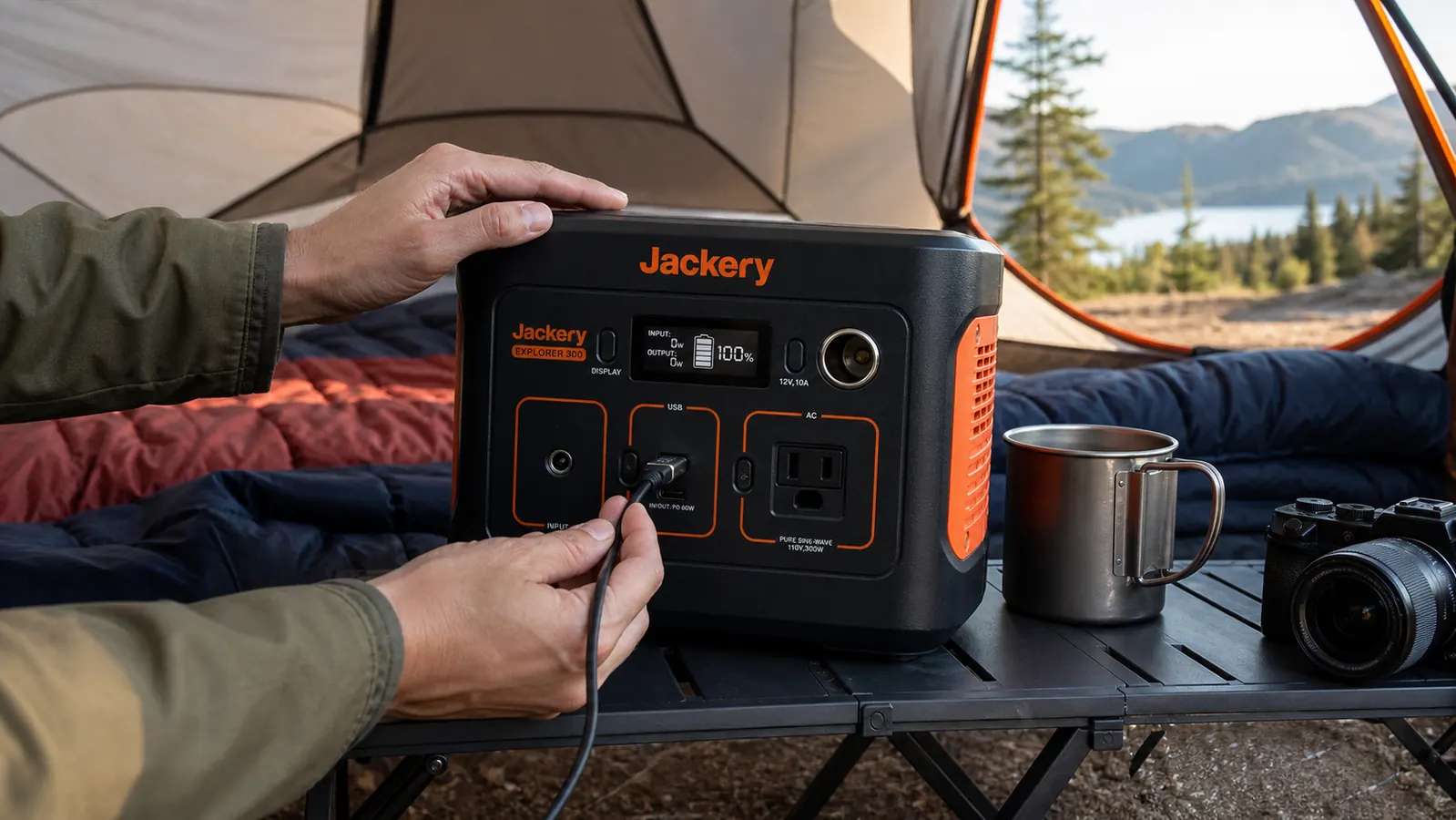
For most two to four person car camping weekends, a unit in the 250-300Wh range is the sweet spot. It's heavy enough to handle a real load without being the one thing that takes up half your cargo space. The Jackery Explorer 300 sits at 292Wh, weighs about six and a half pounds, and fits inside most mid-size coolers or under the back seat of an SUV. It has two USB-A ports, one USB-C (18W), one car output port, and two 110V AC outlets, which covers every realistic camping load without requiring a separate adapter. The LiFePO4 battery chemistry also means it holds charge well between trips, which matters if you're not camping every weekend.
If you're running a CPAP every night, a full-size laptop, or feeding a small group of four or more with a mix of devices, step up to a 500Wh unit. For solo trips or ultra-light weekenders who just want to keep a phone and headlamp going, a 150-200Wh unit is enough.
Step 3: Set Up Solar Top-Up for Trips Longer Than Two Nights
A standalone power station is a closed system. You arrive with whatever capacity it has, and you draw it down over the trip. For a two-night weekend, that's usually fine. For three nights or more, or if you're running heavier loads like a CPAP every night, you need a way to add energy back in during the day.
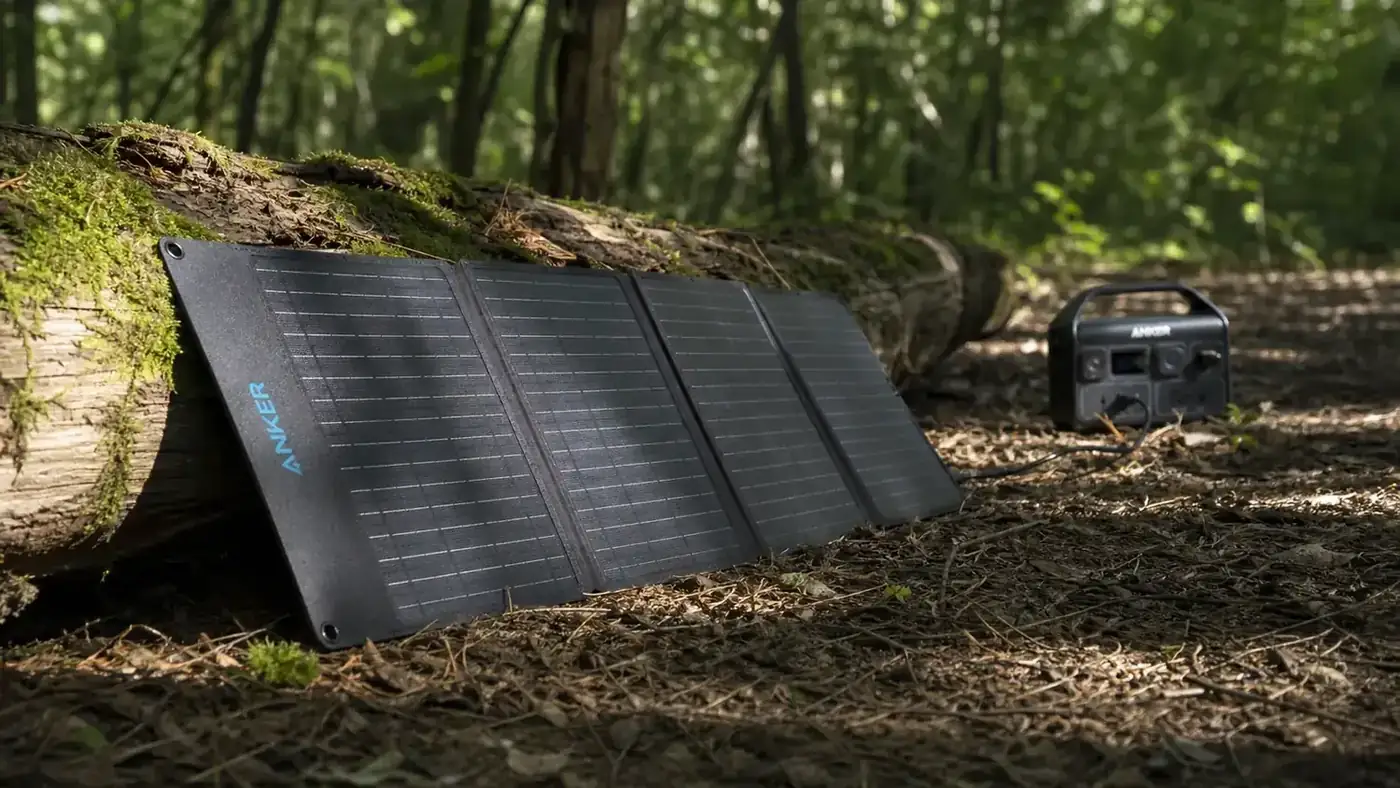
A foldable solar panel is the practical answer for car camping. A 60-100W panel gives you a realistic recharge rate of 40-70W in direct sun, which means you can recover 200-300Wh over a solid four to five hour charging window in summer sunlight. That's enough to top off a 292Wh unit from 30% back to full, or to maintain near-full charge day over day if your overnight draw is modest.
A few setup notes: angle the panel toward the sun and reposition it once or twice during the day for maximum output. Keep the cable run short and check that your power station's solar input port matches the panel's connector before you leave the driveway. Most Jackery units use a proprietary connector, and the compatible panels are listed on the product page. You don't need to babysit the charging process once it's set up, but you do need to set it up deliberately rather than just tossing it in a sunny patch and hoping.
A 60-100W solar panel can recover 200-300Wh over a sunny afternoon. For a three-night trip that's the difference between arriving home with charge left and doing a panicked triage of what not to run on the last night.
Step 4: Prioritize Loads and Set a Recharge Trigger
Even with a well-sized power station, trips go sideways. An extra night, a cloudy day that limits solar, or someone discovering they also need to charge a drone all conspire against your math. The fix is a simple load priority list and a recharge trigger you decide before the trip starts.
Priority one: medical devices like CPAPs, hearing aid chargers, or insulin coolers. These are non-negotiable. Priority two: navigation, which in practice means at least one phone charged enough to access maps and make emergency calls. Priority three: camp lighting, because stumbling around a dark site is miserable and risky. Priority four: comfort loads like the fan or a Bluetooth speaker. Set a rule that if the unit drops below 30%, you shut off all priority four loads and anything that isn't actively charging.
If you're using solar, the recharge trigger is easy: put the panel out every morning and don't worry about it. If you're running without solar on a longer trip, the trigger is at the campsite or trailhead: plug into your car's 12V outlet or use the unit's AC input while you're driving to camp to top it up before you arrive.
Step 5: Charge the Power Station Before You Leave Home
This one sounds obvious and I've still botched it. The Jackery Explorer 300 takes about 5-6 hours to charge from empty on a standard wall outlet at home, and about 3.5 hours with a 60W fast charger. Plug it in the night before you leave, not the morning of.
Also check the charge level after any trip where you didn't fully drain it. LiFePO4 batteries handle partial charges and storage better than older lithium-ion chemistry, but sitting at 30% for six months between trips isn't great for any battery. Either run a short charging cycle before storage or top it up right after the trip so it's ready to go next time.
One more thing: the display screen on most power stations shows remaining watt-hours, not percentage. If yours shows percentage, do the math once to know what each 10% increment actually represents in watt-hours. Knowing '40%' means 'about 117Wh' is much more useful than just knowing you're at 40%.
What Else Helps
A few supporting gear choices make the power station work better. First, use efficient LED lanterns rather than incandescent bulbs. A good LED camp lantern running at 5W draws almost nothing from your battery compared to an old halogen that pulls 35W. Same light, roughly seven times the runtime. Second, charge phones and small devices during the day when the solar panel is adding power back in rather than burning battery overnight. Third, if someone in the group runs a CPAP, bring the manufacturer's travel battery or a DC adapter if the CPAP supports it. DC power skips the inverter entirely and cuts the draw by 10-15%.
For trips where the campsite has a car nearby, a 12V car adapter for the power station lets you top up during a driving day without burning a campsite receptacle. Most power stations including the Explorer 300 support this. It charges slower than a wall outlet (usually around 100W), but it's free energy from a vehicle you're already running.
If you want to go deeper on what the Jackery Explorer 300 can and can't do, and how it compares to similar units, the full review is worth reading: Jackery Explorer 300 Power Station Review. And if you're on the fence about whether a portable power station belongs in your kit at all, 10 Reasons a Portable Power Station Belongs on Every Car Camping Trip covers the most common use cases and who it helps most.
Set this up once, and you stop thinking about power for the rest of the trip.
The Jackery Explorer 300 has handled every load I've thrown at it on car camping weekends, and the LiFePO4 battery holds charge between trips without sitting dead in the garage. If you've been putting off solving this, now is a reasonable time.
Amazon Check Today's Price on Amazon →