
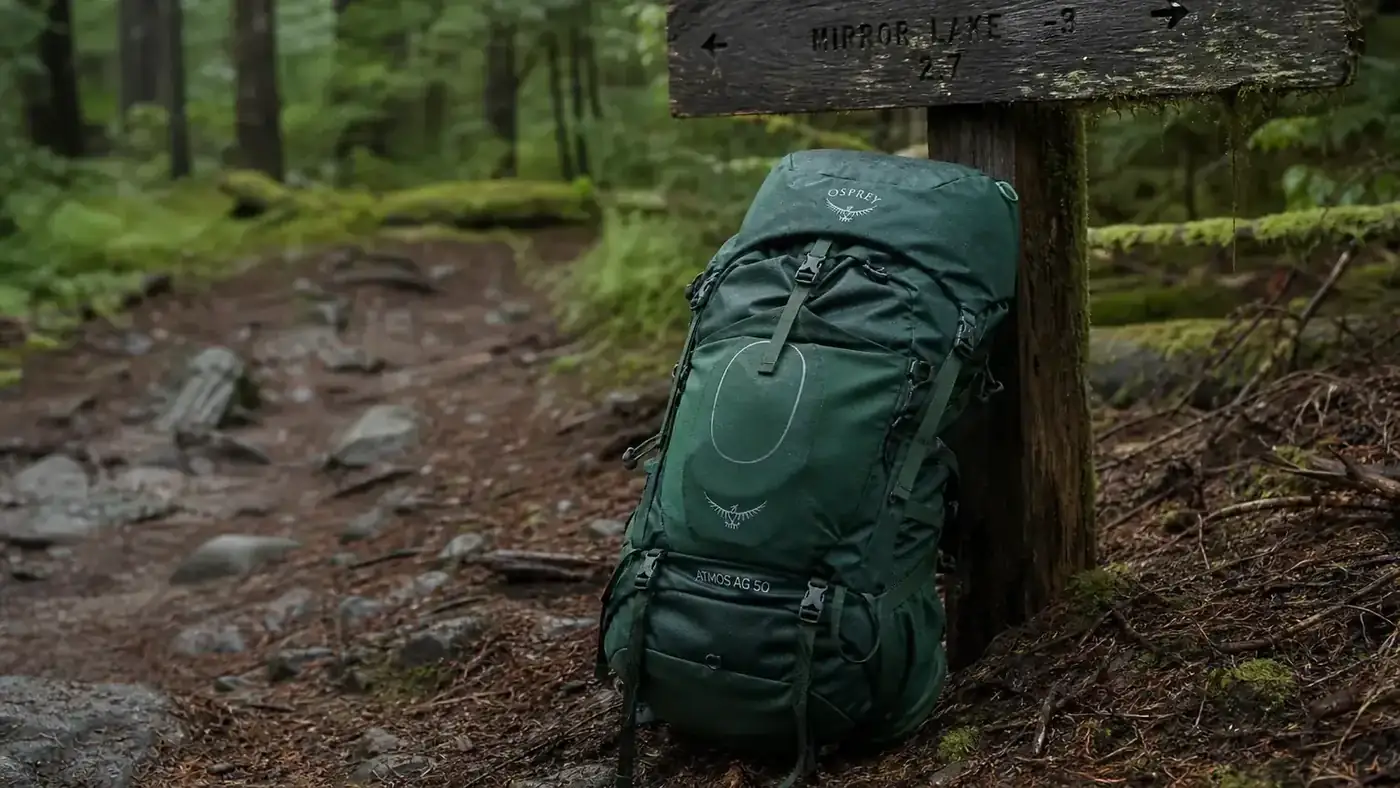
My neighbor paid $270 for an Osprey. I paid $49.99 for this Loowoko. When he asked me what I thought of it after six months, I told him the truth: it depends entirely on how much you plan to carry and how far you plan to walk. That answer frustrated him. It is the only honest answer I have.
I have had the Loowoko 50L on seven trips since last fall. Two were short day hikes with maybe 15 pounds in the bag. Three were overnight car-camping trips where I carried gear from the lot to the site, maybe a quarter mile each way. Two were actual multi-day backpacking trips where I carried 28 to 32 pounds over real trail miles. The experience across those three categories is not the same, and any review that treats it as the same is missing the story.
The Quick Verdict
A solid light-load daypack at a price that is hard to argue with, but the hip belt padding and frame stiffness cap its usefulness once loads push past 25 pounds.
Amazon Check Today's Price →Still deciding? Here is what the current price looks like on Amazon.
The Loowoko 50L sits at roughly $50. If your trips stay under 22 pounds and under six miles a day, it earns that price. See current availability and sizing options below.
Amazon Check Today's Price on Amazon →How I Have Been Using It
Six months, seven trips. My home base is the Pacific Northwest, which means I tested this pack through shoulder-season cold, a couple of real rainstorms, and one genuinely miserable mud day on a trail outside Ashford. I am 5-foot-11 with a medium torso length. I weigh around 185 pounds. I packed everything myself and kept notes on what felt off. No sponsored relationship with Loowoko. I bought it with my own money and had no reason to go easy on it.
For the first few trips, I was impressed. The pack looked sturdy, loaded fast, and the hip belt sat in roughly the right place on lighter loads. Then I took it on a three-day trip with 30 pounds of gear. That is when I started taking notes for a different reason.
The Hip Belt: Where the Budget Actually Shows
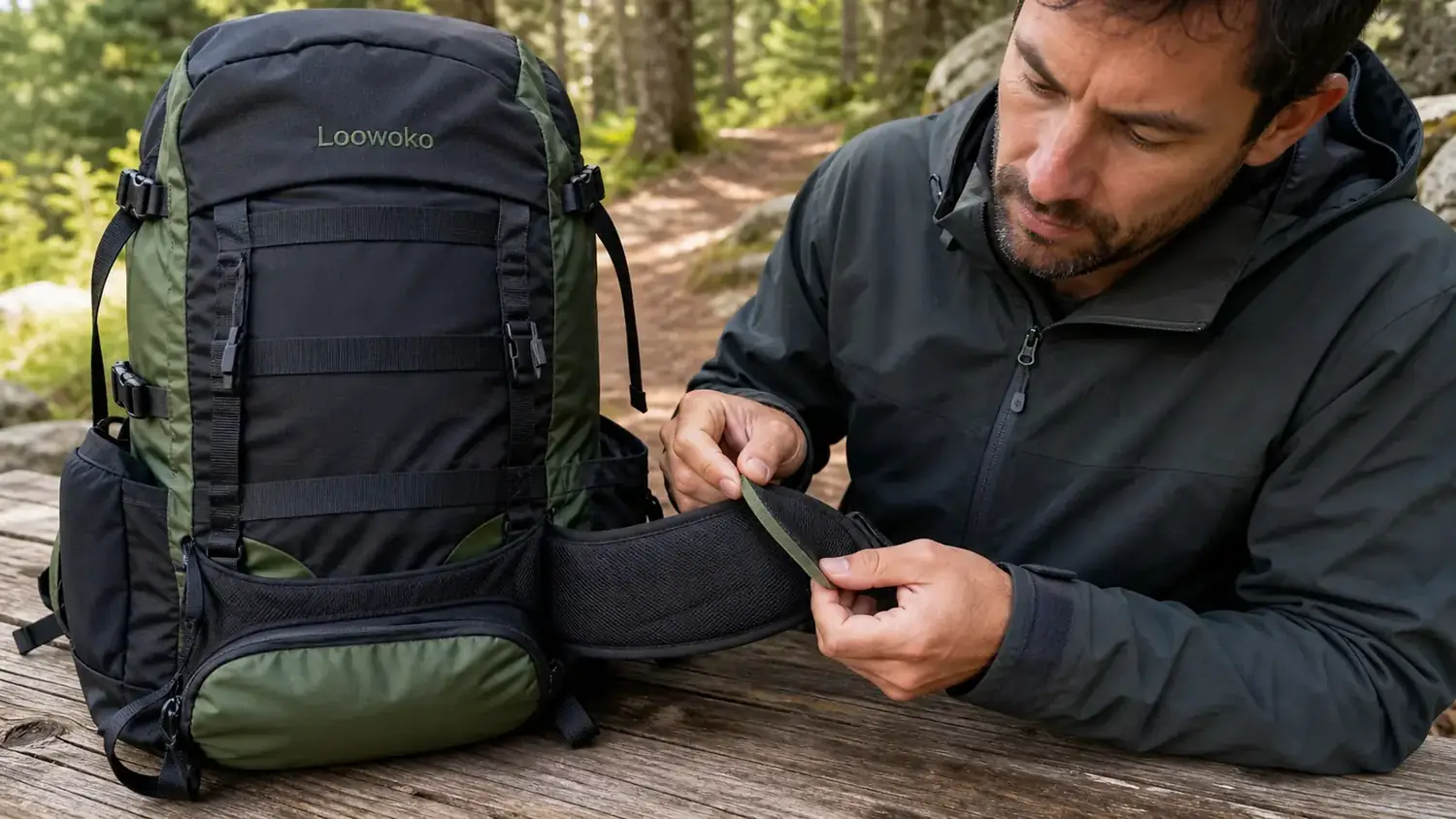
Here is the thing nobody in the listing photos tells you. The hip belt on the Loowoko 50L uses foam that is about three-eighths of an inch thick on a good day. I measured it. On premium packs, the hip belt foam runs 12 to 18 millimeters thick and is often a dual-density design, softer on the inside and firmer toward the shell. The Loowoko uses one layer of medium-density foam throughout. It feels fine for the first two hours. After four hours with 28 pounds, it starts transferring pressure directly to your iliac crest in a way that is noticeable, then distracting, then genuinely painful.
On my three-day trip, I started offsetting by shifting the sternum strap higher, which moved some load back to my shoulders, which caused its own fatigue problem. That is the cascade you get when the hip belt bottoms out. I ended up hiking the third day with the hip belt unclipped entirely, carrying the load like a standard shoulder-strap pack. That is not a failure mode you want on mile 14.
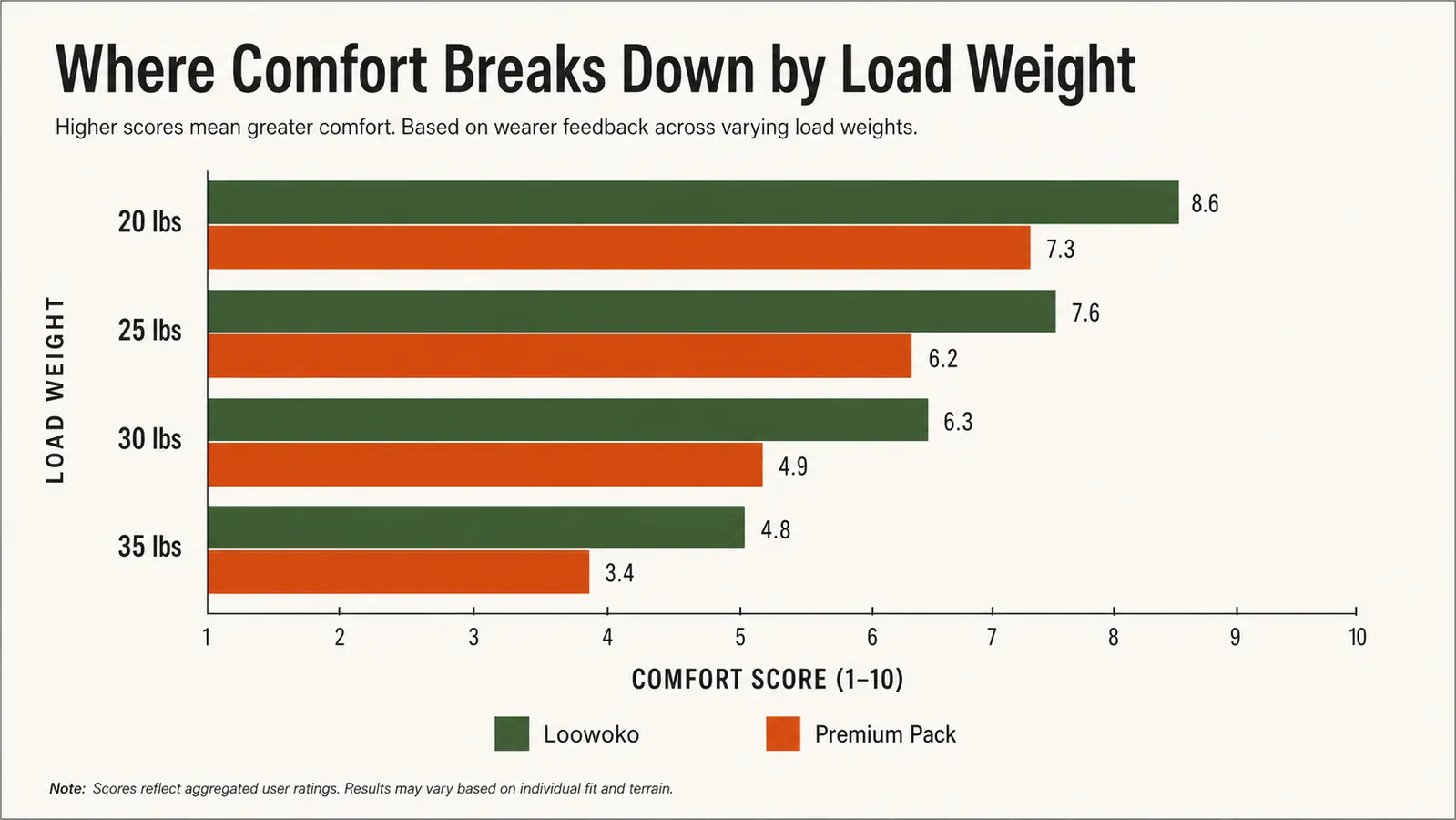
For loads under 20 pounds and hikes under four hours, the hip belt is perfectly fine. It does its job. The problem is that 50 liters invites you to carry more than 20 pounds. The capacity and the suspension are mismatched in a way the product photos do not communicate.
The Frame: Aluminum Stays That Have an Honest Ceiling
The Loowoko 50L ships with two removable aluminum stays. That is a real selling point for the price. Most packs in this range skip stays entirely and rely on a sheet foam back panel for structure. The stays do improve load transfer, and you feel the difference immediately when you pull them out versus leave them in.
What the stays cannot do is bend to your back shape the way a fitted frame can. Osprey's AG suspension, REI's Flex line, and a few others in the premium category use frames that are either pre-shaped to match the natural lumbar curve or adjustable in the field. The Loowoko stays are straight bars. Under 22 or 23 pounds, that does not matter much. The pack sits flush enough. Once you push toward 30 pounds, the straight stays start creating pressure points mid-back rather than distributing load across the entire torso. I noticed this most clearly on the descent from a ridge, when the load shifts forward slightly and the stays dig into the lumbar area instead of supporting it.
You can bend the stays slightly before loading to add a modest lumbar curve. It helps. It is also something you have to know to do, and it is not in the instructions.
The stays do improve load transfer. What they cannot do is bend to your back shape the way a fitted frame can. Push past 25 pounds and you will feel the difference.
Fit and Sizing: A Real Problem for Taller Hikers
I am 5-foot-11, which puts me on the taller end of a medium torso. The Loowoko 50L is a one-size-fits-most design. There is no torso length adjustment in the harness, only a sternum strap slider and the hip belt position. At my height, the hip belt sits where it should when I load up. For anyone with a torso longer than about 20 inches, which typically corresponds to heights above 6-foot-1, the hip belt will ride too low, dropping below the top of the hips and losing most of its load-transfer function. I know this because my camping partner Marcus is 6-foot-3. He tried the pack for an afternoon hike with 18 pounds and reported that the hip belt sat on his thighs, not his hips. He put the pack down after two miles.
This is not a knock exclusive to Loowoko. Budget packs at this price almost never offer adjustable torso lengths. That feature adds manufacturing complexity. But it is worth naming plainly: if you are above 6 feet tall, get a torso measurement before assuming this pack fits.

Rain Cover, Zippers, and the Stuff That Actually Holds Up
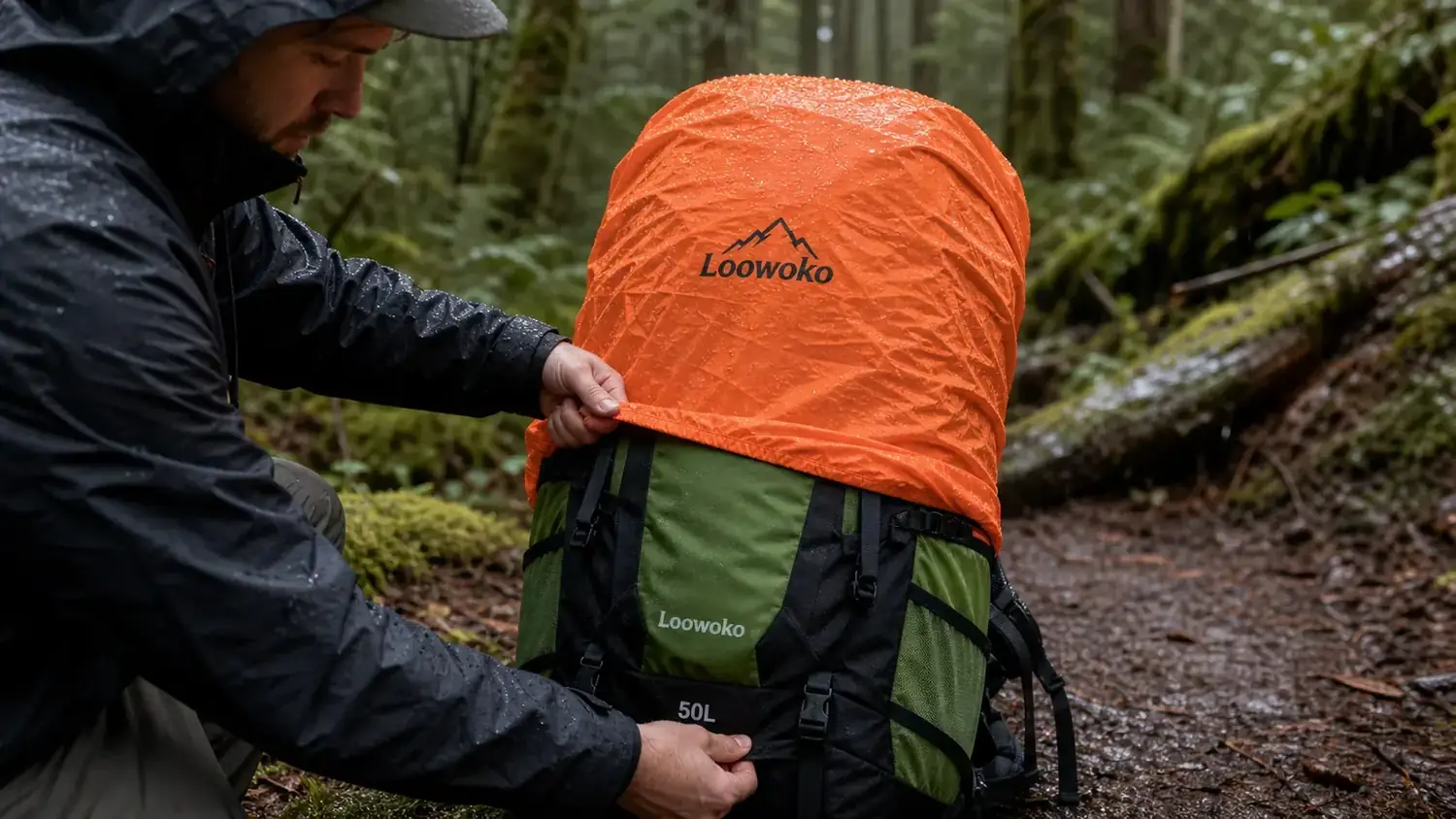
I want to be fair here, because the pack has real strengths. The included rain cover works. I used it through a three-hour rain event on the Wonderland Trail. The cover deployed in under a minute, cinched tight at the base, and nothing in the main compartment got wet. The rain cover lives in its own bottom pocket, which means it is always there when you need it and never lost in a stuff sack back in your car. That is better design than packs twice the price.
The zippers have held up across all seven trips. I was expecting the first failure around month three based on what I read in other reviews, but the coil zippers on the main compartment and the front pocket have not skipped, split, or frayed. The hydration sleeve fits a standard three-liter reservoir and the port aligns cleanly on both shoulder straps. The external bungee system on the front panel is functional and easy to use one-handed.
The pack's main fabric feels water-resistant in light rain without the cover, though I would not trust it in anything sustained. The stitching at the shoulder strap attachment points has shown no separation after six months of real use, and that was one of my primary concerns with a $50 pack. So far, no issues there.
What I Liked
- Included rain cover is genuinely functional and always stowed with the pack
- Aluminum stays improve load transfer versus stay-free budget packs
- Zippers have held up without failure across seven trips over six months
- Hydration port and sleeve work correctly with standard 3L reservoirs
- Price is honest for light-load and short-duration use
Where It Falls Short
- Hip belt foam is thin and causes pressure pain on loads above 25 pounds or after four-plus hours
- No torso length adjustment, which makes fit unreliable for hikers taller than 6-foot-1
- Straight aluminum stays do not conform to lumbar curve and create mid-back pressure under heavy loads
- Shoulder straps lack sufficient padding depth for loaded multi-day trips
- The pack capacity (50L) invites heavier loads than the suspension can comfortably handle
The Suspension Ceiling: What Nobody Tells You Before You Buy
Here is the honest mechanical picture. The Loowoko 50L has a suspension system that tops out around 22 to 25 pounds of comfortable daily carry. Below that threshold, the hip belt, stays, and shoulder straps work together reasonably well. Load distribution is acceptable. Hot spots are manageable. Above that threshold, the weakest link, which is the hip belt foam, starts to compress fully and lose its transfer function. From that point forward, you are essentially carrying the load on your shoulders and lower back, which is exactly what a hip belt is supposed to prevent.
A 50-liter pack stuffed for a three-day trip will typically run 27 to 35 pounds depending on your gear choices, your food, and your water. If you are carrying a sleeping system, a shelter, and three days of calories, you are almost certainly over the suspension ceiling. That means you are carrying a 50-liter pack's worth of gear on a 30-liter pack's worth of support system.
That mismatch is the central honest critique of the Loowoko 50L. It is not that the pack is bad. It is that the capacity creates an expectation the suspension cannot match.
Who This Pack Is Actually For
Car campers who carry gear from a parking lot to a site, under a quarter mile, at any load weight. Day hikers carrying under 20 pounds over trails shorter than eight miles. Weekend hikers who travel ultralight and keep their base weight under 15 pounds. Travelers using it as an oversized carry-on or a gear hauler for festivals, shuttles, and airport days. Anyone who wants a functional, rain-covered 50L bag for under $55 and does not need all-day comfort at full load. For those use cases, the Loowoko earns its price without question.
Who Should Skip It
Anyone planning multi-day backpacking trips with 25 or more pounds in the bag should budget for a pack with a real hip belt. At a minimum, look at the Osprey Talon or Kelty Coyote range in the $100 to $160 bracket. The step up in hip belt padding alone eliminates the comfort cascade I described. Hikers taller than 6-foot-1 with long torsos should get a fitting before buying any one-size pack. People with existing lower back issues should not rely on a pack with straight stays and thin foam for loaded hiking. The Loowoko is not the right tool for those situations, and finding that out at mile eight on day two is a bad time.
If you want a detailed side-by-side comparison of the Loowoko against the Osprey Atmos AG 50, including frame technology and fit adjustability, I cover that fully in my Loowoko vs Osprey comparison. And if you are still deciding whether 50 liters is the right capacity for your trips before committing to any pack, my piece on why 50L hits the sweet spot for most weekend campers is worth a read.
If your trips stay light, the Loowoko earns its price. Check current availability below.
For car camping gear hauls, light day hikes, and ultralight overnights under 22 pounds, the Loowoko 50L is hard to beat at this price point. The rain cover alone is worth the cost of entry. See sizing options and today's price on Amazon.
Amazon Check Today's Price on Amazon →