
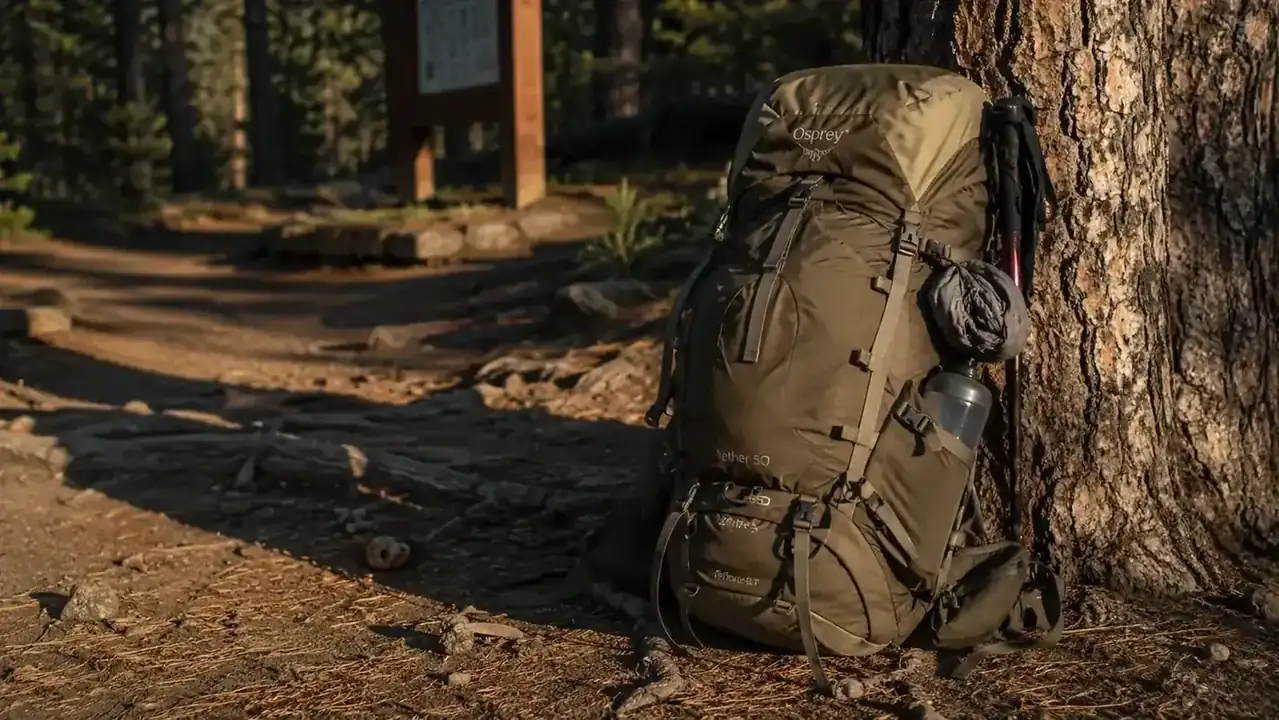
Every camping trip I have led, somebody shows up with the wrong pack. Half the group hauls a 70L expedition bag for two nights, shoulders sagging, hip belt riding wrong. The other half tries to cram three days of gear into a 28L daypack and ends up leaving their rain fly at the car. The hiking backpack sizing debate is real, and it costs people comfort on the trail. After years of sorting this out for friends and trip partners, I keep arriving at the same answer: a 50L camping backpack is right for most weekend campers, most of the time.
That is the premise of this list. Ten reasons 50 liters lands where it does, and why the pack I have been recommending lately, the Loowoko 50L, has quietly become the default suggestion for anyone who wants a capable, waterproof pack without dropping $250 on a brand name.
Picking a pack? This 50L fits two nights of gear and costs less than a tank of gas.
The Loowoko 50L is waterproof, comes with a rain cover, and has over 5,600 reviews on Amazon. It is what I point people to when they ask where to start.
Amazon Check Today's Price on Amazon →It fits a full two-night kit without forcing you to choose between your sleep system and your cook gear
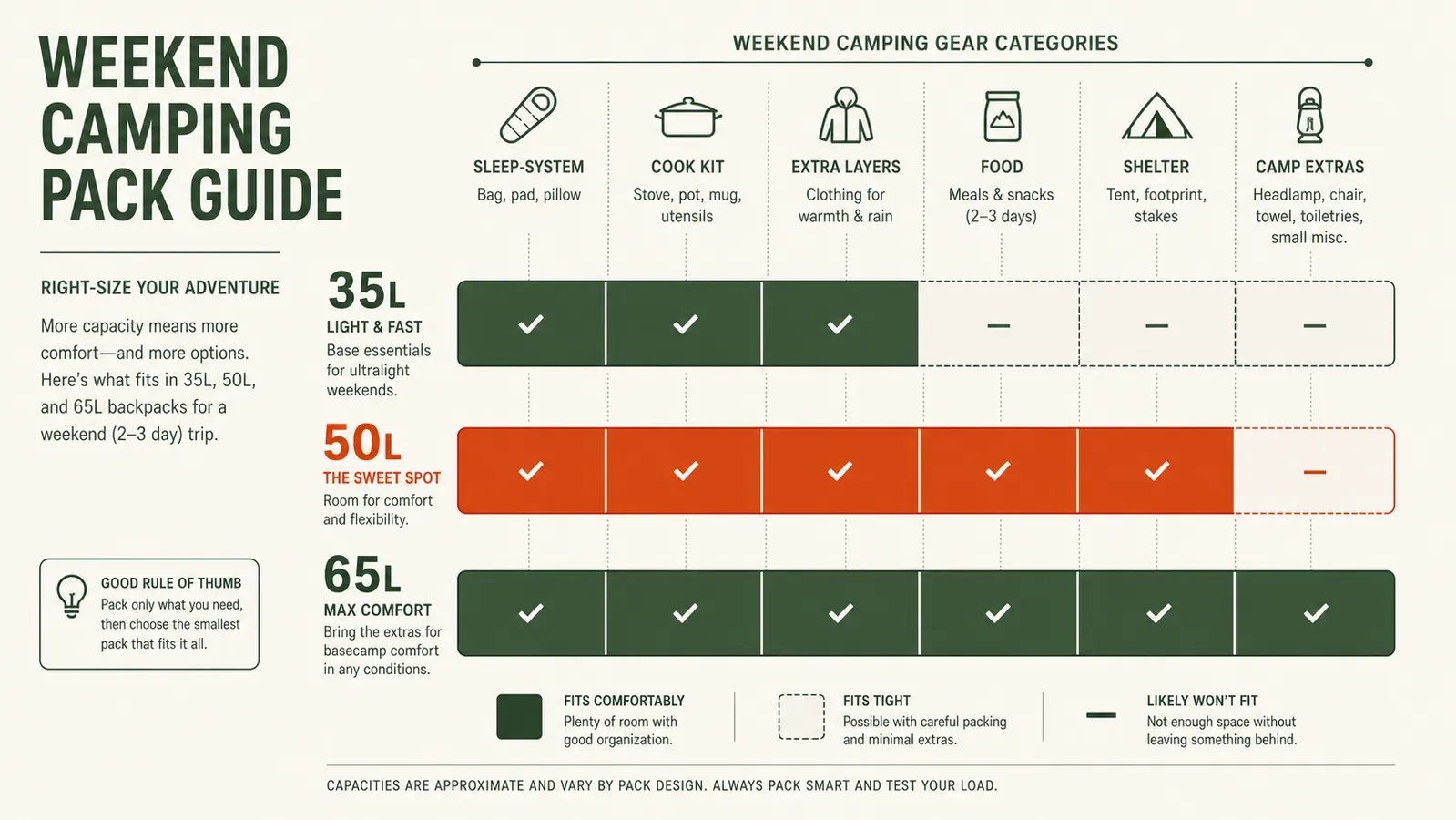
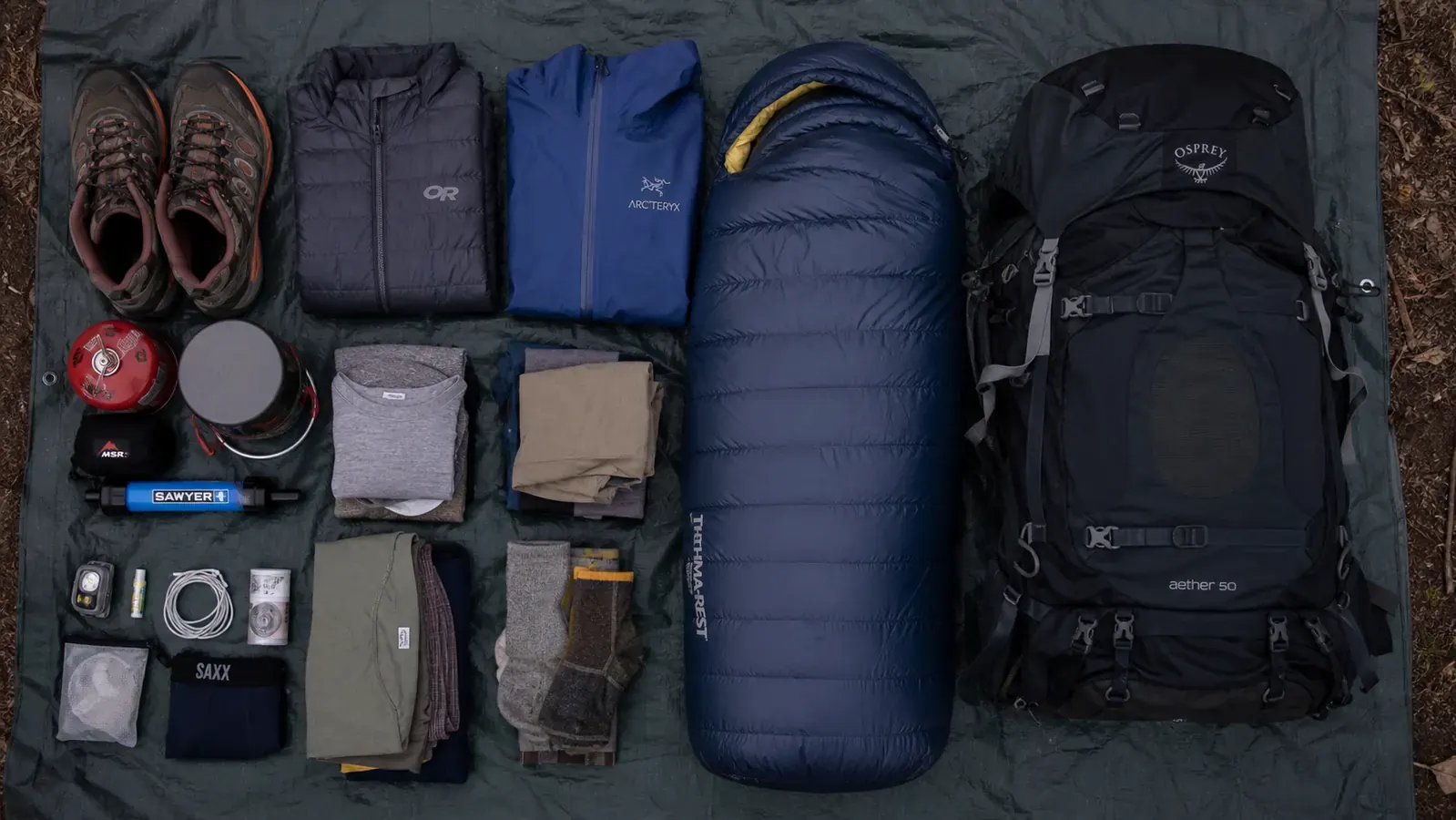
A standard two-night camping load runs about 35 to 42 liters when packed efficiently: sleeping bag, pad straps, a change of clothes, food for six meals, a pot, water filter, headlamp, first aid, and rain jacket. A 50L pack holds all of that with room left for a camera or a book. A 35L forces cuts. A 65L invites you to keep adding things you do not need.
The weight stays manageable because you cannot overfill it
Bigger packs invite heavier loads. That is not a gear problem, it is a human problem. A 70L bag has room for another three pounds of stuff, and most people will fill it. A 50L has a natural ceiling that keeps your carry weight in the 25 to 35 pound range for a weekend trip, which is where most campers feel comfortable over eight miles of trail.
It works as a carry-on for fly-in basecamp trips
Most airline overhead bins accept bags up to 45 to 50 liters if they are soft-sided and not overstuffed. A 50L hiking backpack, packed sensibly, usually clears that threshold. An 80L never does. This one detail has saved several of my trips from checked-bag fees and lost luggage.
The frame and harness are sized for real loads, not day hike loads
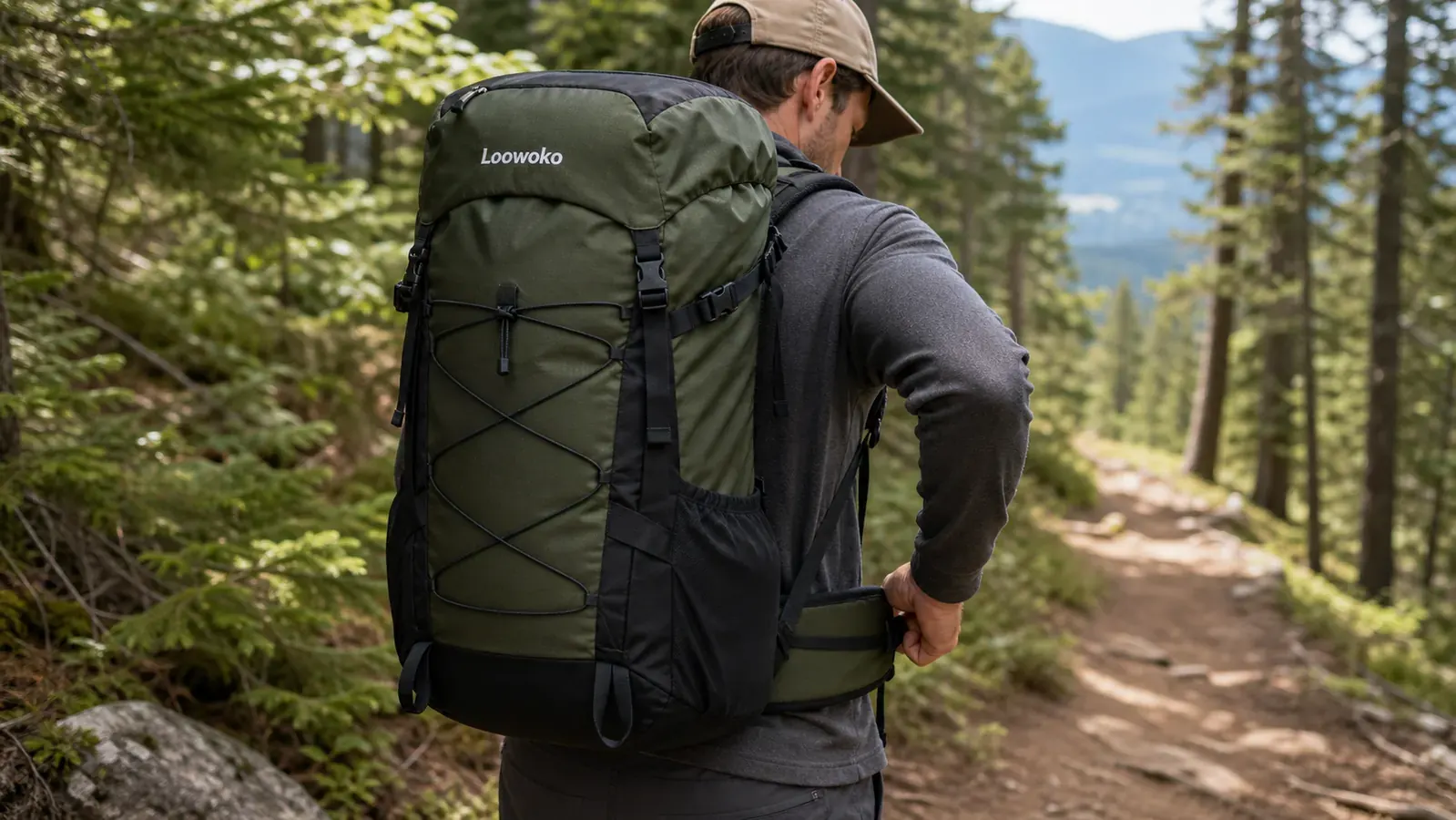
A 30L daypack is not built to carry 30 pounds. Its frame sheet and shoulder straps are designed for lighter weights over shorter days. A 50L camping pack comes with a proper internal frame, load lifters, and a padded hip belt that actually transfers weight to your hips. The Loowoko 50L has all three. The difference in how your back feels at mile ten is not subtle.
You can access your gear without unpacking everything
Well-designed 50L packs include a bottom compartment for your sleeping bag, a main compartment for the bulk of your gear, front pockets for quick-grab items, and hip belt pockets for snacks and a phone. The Loowoko 50L has all of those zones. That organization is what separates a frustrating pack from a functional one when you are standing in the rain at mile seven trying to find your headlamp.
The best pack size is the one that holds your full kit, nothing extra, with room to get your hand in. For most weekend campers, that number is 50 liters.
A rain cover actually fits and stays on
Most rain covers are designed for specific volume ranges. A cover sized for a 45 to 55 liter bag fits a 50L snugly. It will not flap loose or bunch up. The Loowoko 50L includes its own integrated rain cover stored in a bottom zip pocket. You do not have to remember to pack a separate cover or buy one that almost fits.
It handles both overnight trips and day hikes from a basecamp
On a three-day trip, I often leave the main pack at camp and do a long day hike with just a summit pack. A 50L camping backpack is substantial enough to be the primary carry the night before and light enough to manage on flat camp terrain. It also fits inside car trunks without the tetris game that a 70L requires.
The price-to-durability ratio is hard to beat in this size class
You can spend $280 on a 50L from a premium brand. The frame system and fit customization may justify that price if you are logging 60-day years. For most weekend campers who get out eight to fifteen times a year, the Loowoko 50L at its current price delivers enough durability to last several seasons without the premium brand premium. The 5,600-plus Amazon reviews tell a consistent story on that front.
It forces good packing habits
An oversized pack teaches you nothing. You can always find room for one more thing. A 50L camping backpack has an honest ceiling that pushes you to pack with intention. Once you learn to get a full two-night kit into 50 liters, you are a better camper. Everything has a place. You know what you have. You stop forgetting gear because you actually thought about what went in.
It grows with you as your kit gets lighter
New campers tend to carry heavier gear. Cast iron cooksets, heavy sleeping bags, cotton layers. As you upgrade to lighter gear over time, your 50L stays right. You do not outgrow it. You just get more air in it, which is a comfortable problem to have. A 35L that feels fine with a 2-pound quilt and titanium cookware punishes you when you buy your first cotton tent.
What I'd Skip
If you are doing true ultralight backpacking with a sub-20-pound base weight, a 50L is more than you need. A well-organized 35L works fine when your sleep system weighs 2 pounds and your shelter weighs 1. If you are a true minimalist, go smaller. But most people reading this are not there yet, and a 50L camping backpack is a better starting point than learning packing discipline the hard way on a 35L.
I have never had someone come back from a weekend trip and say their 50L was too much. I have had plenty say their smaller bag was too small.
Stop guessing on pack size. The 50L solves it.
The Loowoko 50L hiking backpack is waterproof, has an internal frame and hip belt, includes a rain cover, and has been reviewed by over 5,600 buyers. It is the pack I hand people when they ask where to start and do not want to overthink it.
Amazon Check Today's Price on Amazon →