
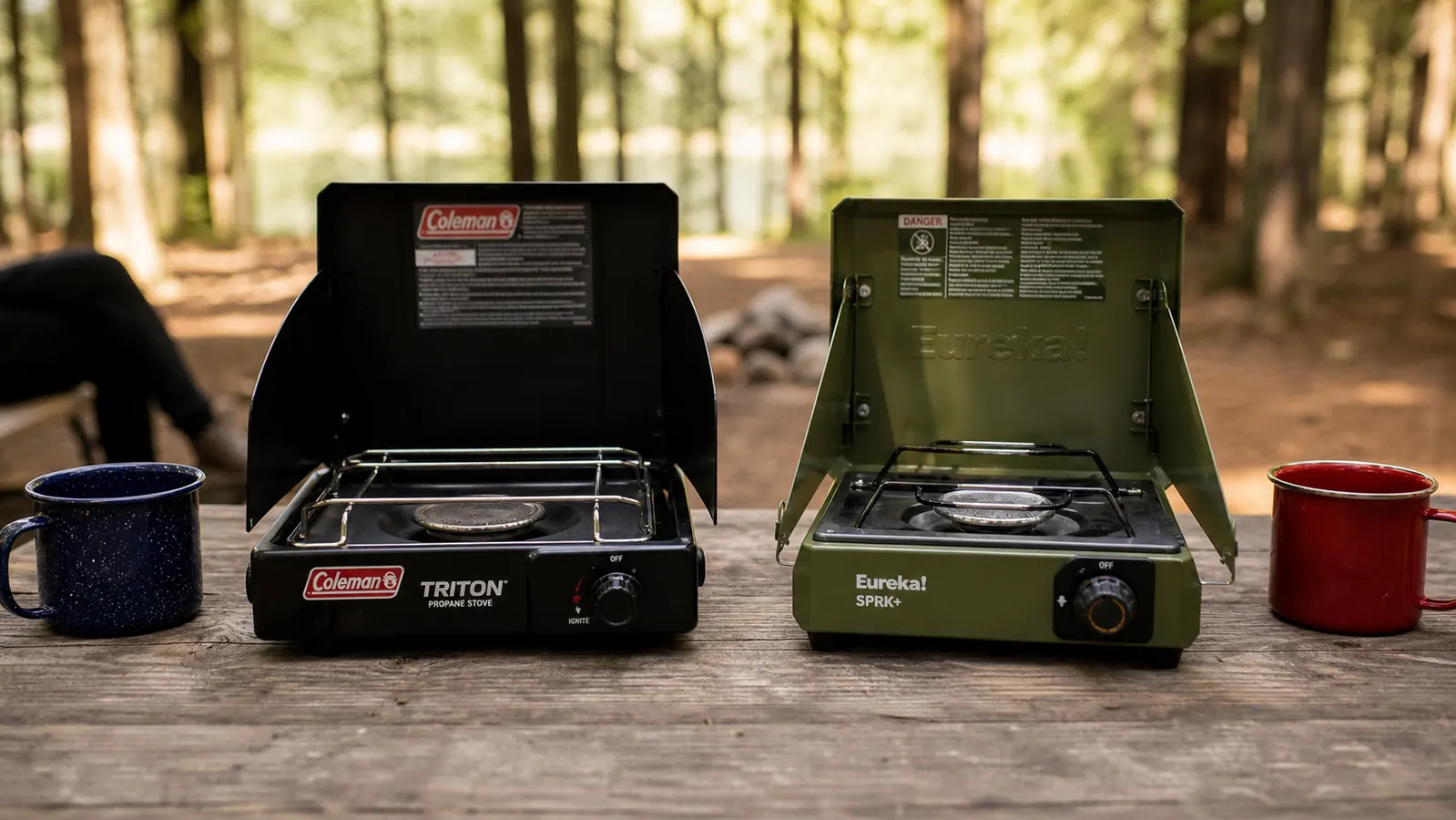
If you are shopping for a two-burner propane camp stove and you have spent more than ten minutes on this, you have probably seen both of these. The Coleman Triton sits around $108. The Camp Chef Explorer 2-Burner sits closer to $200. The question every reasonable person asks: is there actually $90 worth of difference between them?
Short answer: not for most weekend campers. The Triton handles everything a car camping kitchen needs, folds smaller, and costs considerably less. There are specific situations where the Explorer's extra output earns its price, and I'll name them plainly. But the Triton wins this comparison for the majority of people reading it.
| Coleman Triton | Camp Chef Explorer 2-Burner | |
|---|---|---|
| Total BTU Output | 22,000 BTU (two 11,000 BTU burners) | 30,000 BTU (two 15,000 BTU burners) |
| Approximate Price | ~$108 | ~$200 |
| Folded Weight | 7.9 lbs | 12.7 lbs |
| Folded Dimensions | 4.1 x 21.9 x 13.7 in | 6 x 23 x 14 in |
| Wind Protection | Integrated side wind panels | No built-in wind panels |
| Ignition | Push-button Piezo igniter | Push-button Piezo igniter |
| Grate / Cooking Surface | Single continuous porcelain-coated grate | Two separate cast-iron grates (removable) |
| Regulator Hose Length | Standard short hose, 1-lb canister only | Longer hose, compatible with bulk propane tanks |
| Carry Case Included | No (carries as a self-latching unit) | No |
Where the Coleman Triton Wins
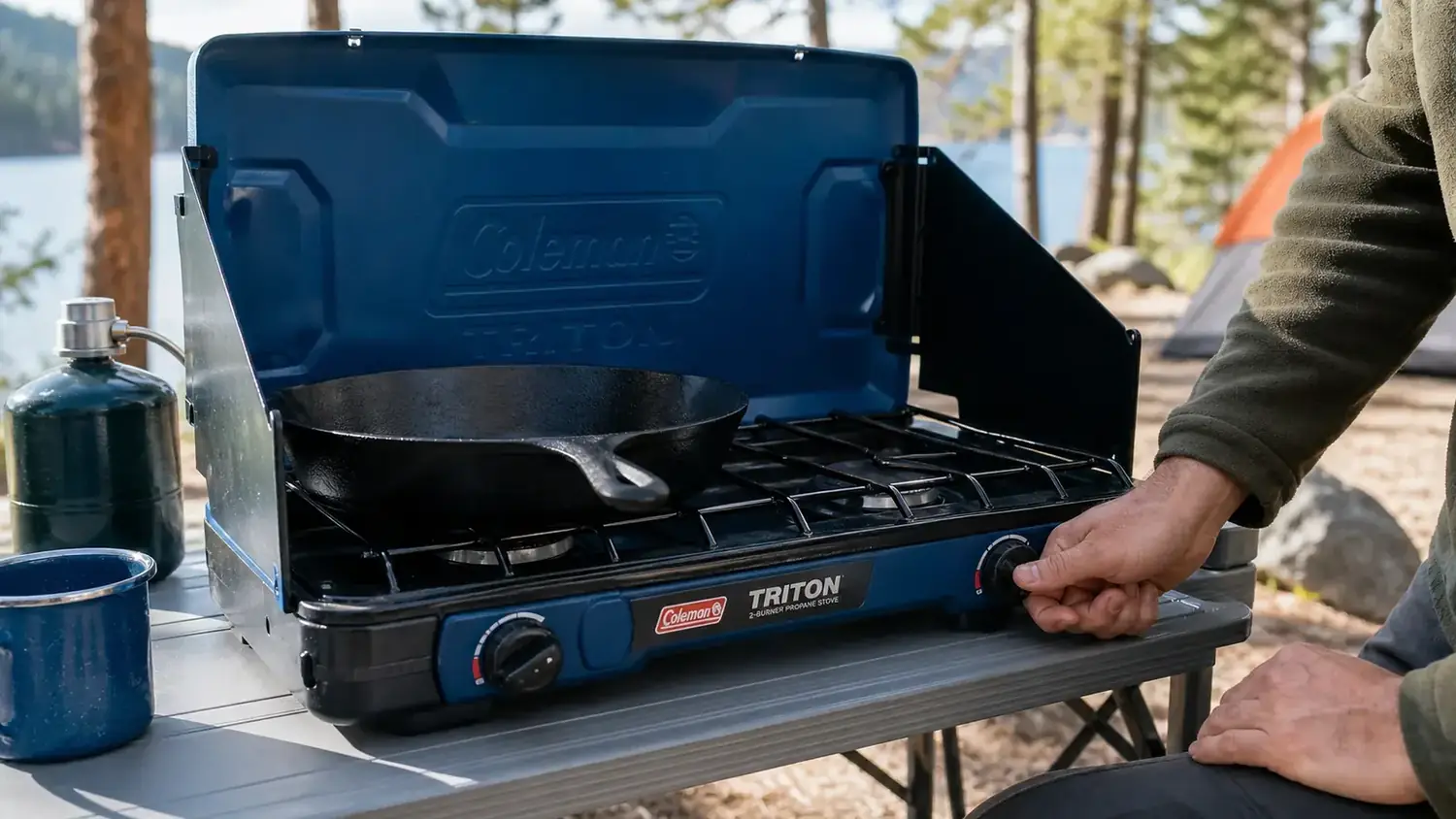
The Triton wins on three things that matter every single trip: weight, wind, and value. At 7.9 pounds folded, it is nearly 5 pounds lighter than the Explorer. That sounds minor until you are loading a truck bed or carrying gear across a large campsite at dusk. Five pounds adds up fast when you are already hauling a cooler, chairs, and firewood.
The built-in wind panels are worth more than they look. When you are cooking scrambled eggs at 6,500 feet of elevation with any kind of morning breeze moving through camp, exposed burners waste fuel and cook unevenly. The Explorer does not have integrated wind panels. You either bring a separate windscreen, which is extra weight and extra gear to lose, or you wrestle the stove into a corner of the picnic table and hope the terrain blocks the wind. The Triton's panels fold out in about two seconds and do the job without any extra accessories.
The 22,000 combined BTUs also get underestimated. That is 11,000 per burner. For car camping purposes, this is enough to boil a pot of pasta water while a cast-iron skillet runs bacon alongside it. Unless you are feeding ten people or deep-frying with a large wok, you will not notice the difference between 11,000 and 15,000 BTUs on a typical weekend cookout.
The push-button Piezo igniter is reliable in normal conditions. I always carry a lighter anyway, since igniters are the first thing to fail after a stove gets wet or bounced around in a truck bed. But the Triton's igniter has worked every trip for me, and that is a better track record than I have with some other brands at this price.
Where the Camp Chef Explorer Wins
The Explorer's cast-iron grates are genuinely better than the Triton's porcelain-coated steel. Cast iron holds heat more evenly, cleans up more predictably, and lasts longer under hard use. If you cook on your camp stove dozens of weekends a year for years running, the Explorer's grates will outlast the Triton's. The porcelain on the Triton's grate chips eventually, especially if you store anything heavy on top of it.
The BTU edge matters in two specific situations: high-altitude cooking and large group meals. Water boils at a lower temperature above 8,000 feet, but your stove works harder to get there because the thinner air affects the combustion. The extra BTUs give the Explorer a real edge in true mountain conditions. And if you are regularly cooking for a group of eight or more, those extra 8,000 combined BTUs cut boil times noticeably. The Explorer's longer regulator hose is also a practical advantage if you use a bulk 20-pound propane tank instead of the small green 1-pound canisters. Bulk propane is cheaper per cooking hour, and the Triton's standard hose is not designed for that connection without an adapter.
If the Coleman Triton fits your weekend cooking, today's price is lower than most outdoor retail stores carry it
Rated 4.7 stars by more than 3,500 campers. Two adjustable burners, integrated wind panels, and a folded footprint that fits in any truck bed or minivan cargo area.
Amazon Check Today's Price on Amazon →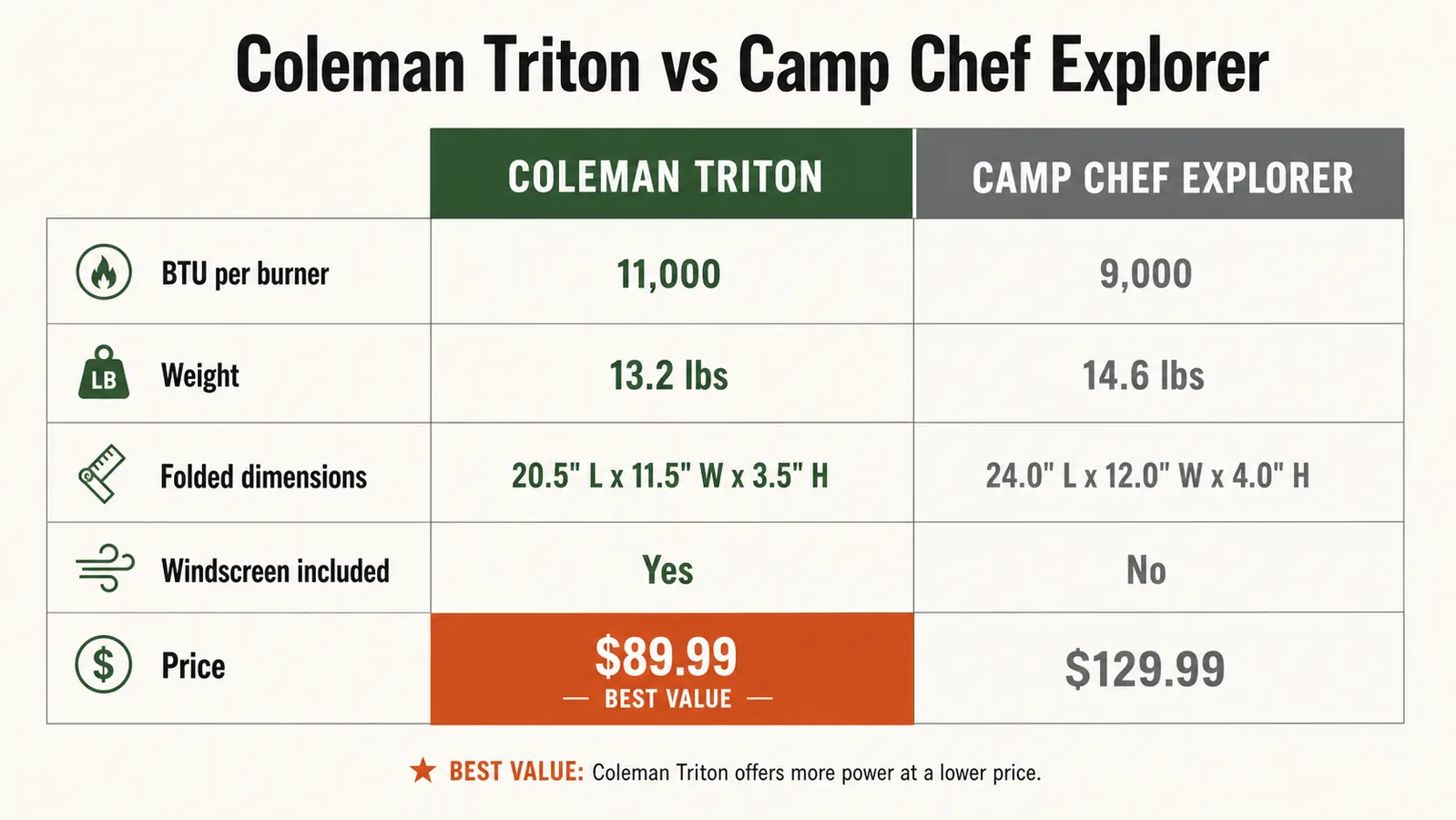
Wind Performance Side by Side
This category deserves its own section because it trips people up when they focus only on BTU ratings. Raw BTU output is a lab number. Real-world cooking performance depends on how much of that heat actually reaches your pan, and wind is the biggest variable at any open campsite.
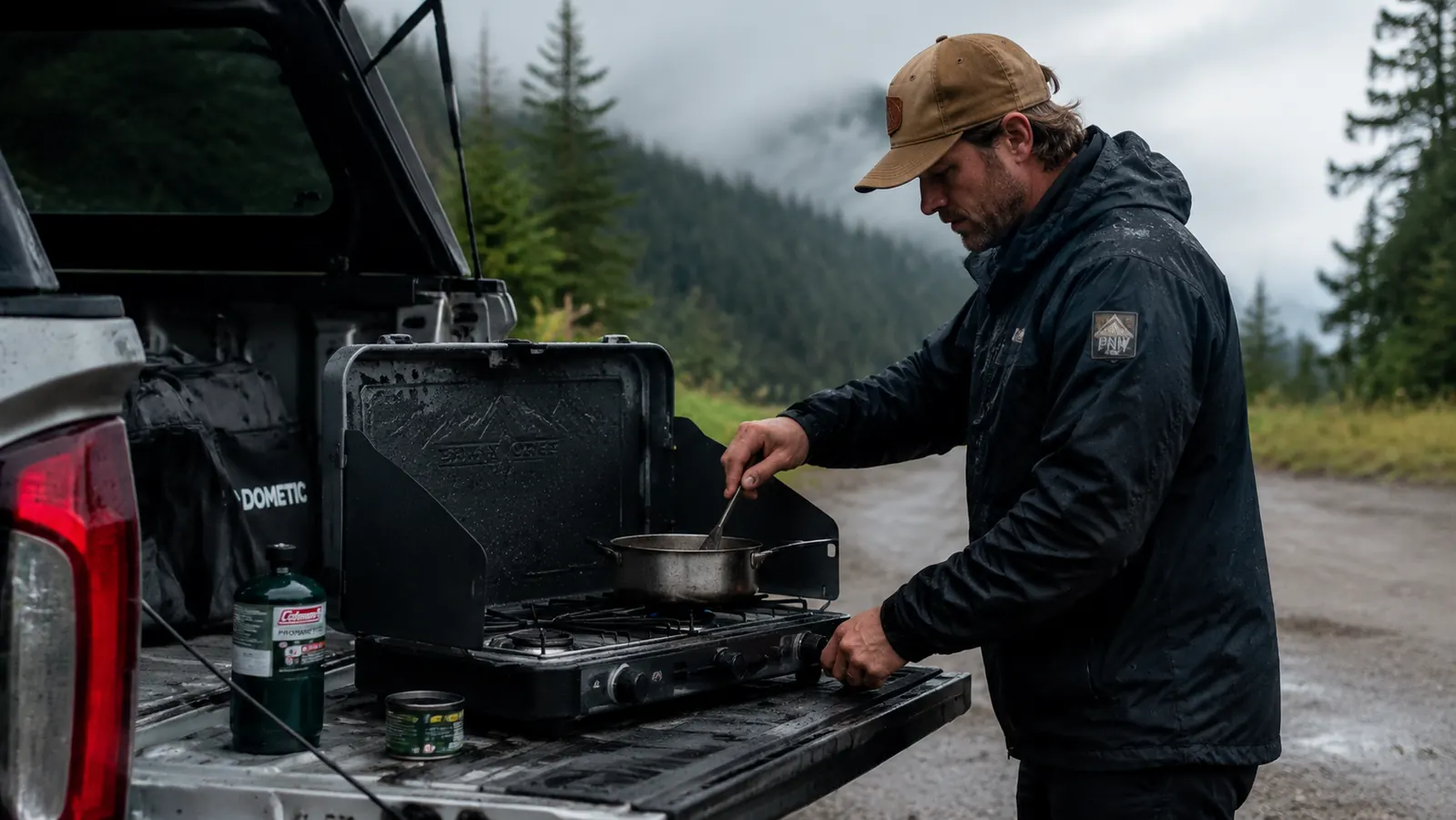
On a calm day, both stoves cook food. On a windy day, the Triton's built-in panels keep both burners burning evenly while the Explorer requires either a workaround or a separate purchase. I cooked side by side with both units on a weekend in October when we had a steady 10 to 12 mph breeze off a ridge. The Triton barely noticed. The Explorer's left burner kept guttering low without a windscreen positioned on that side. It is a fixable problem, but it requires carrying extra gear and thinking about stove placement every time you set up. The Triton just works.
Raw BTU output is a lab number. What hits your pan depends on how much wind is cutting across those burners. That is where the Triton's built-in panels earn their keep.
Pack Size and Setup Reality
Both stoves set up in under two minutes if you have used either type before. Neither requires tools. Both have push-button ignition. Setup speed is not the differentiator here.
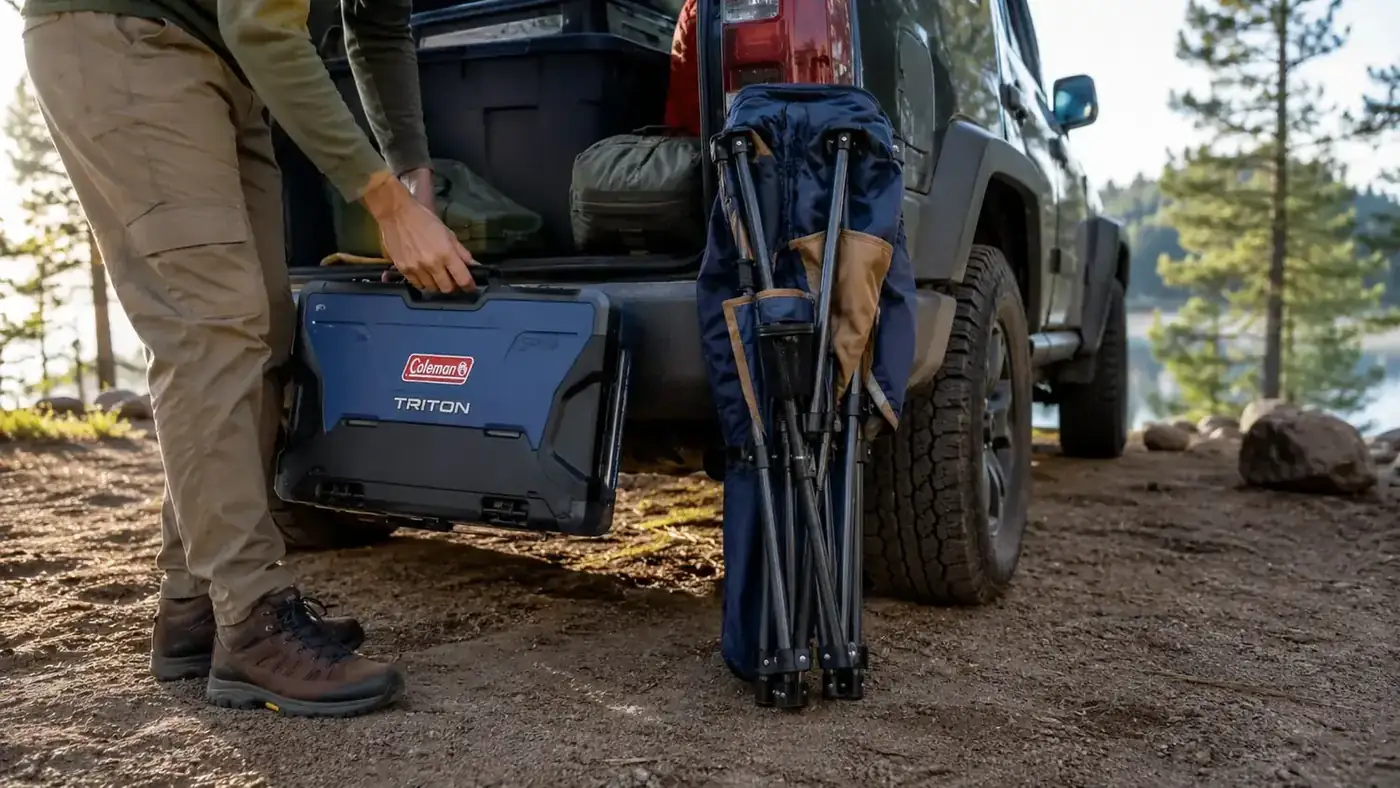
Pack size is a real differentiator. The Triton's folded profile is noticeably more compact. When you are already fitting a tent, a cooler, sleeping bags, and chairs into a vehicle, a stove that takes up less floor space in the cargo area is genuinely useful. The Explorer is not large by any means, but it is bulkier and heavier in the hand when you are moving it from car to table and back again.
Durability and Build Quality Over Time
Coleman has been making camp stoves since 1923. The Triton reflects that lineage. The hinges are solid, the burner valves turn smoothly and hold their positions, and the folding mechanism does not rattle loose over time. The porcelain grate is the one weak point, as I mentioned. It survives normal use for several years but chips if you bang a heavy Dutch oven down without care.
The Explorer is also well-built. Camp Chef has a strong reputation in the camp kitchen space, and the cast-iron grates are a genuine long-term advantage if you are cooking on your stove hard and often. The body of the Explorer is sturdy steel and the burner valves feel precise. This is not a comparison where one stove is flimsy and one is solid. Both are good quality. The question is whether the Explorer's durability advantages justify the price for your specific use.
Who Should Buy Which
Buy the Coleman Triton if you camp at established campgrounds or car camping spots with normal-elevation sites, cook for groups of two to six people, want a stove you can grab and go without thinking about windscreens or adapters, and would rather keep $90 in your pocket for food, fuel, or other gear. This describes the majority of weekend campers I know.
Buy the Camp Chef Explorer if you cook at high altitude regularly (consistently above 8,000 feet), feed large groups where boil time and output genuinely matter, plan to use a bulk propane tank for cost efficiency over many trips, and prefer cast-iron grates for the cooking surface performance and long-term durability. The Explorer also makes sense if you do a lot of Dutch oven cooking at high heat, where those extra BTUs make a noticeable difference.
There is a third category worth naming: people who want the best and are willing to pay for it regardless of whether the use case demands it. The Explorer is a better stove in absolute terms. If you have the budget and you want to buy something once and not think about it again, the Explorer is a reasonable choice. But if you are trying to make a considered purchase decision, the Triton earns its price and then some for the way most people actually camp.
One more thing worth noting: the Coleman Triton has over 3,500 Amazon ratings averaging 4.7 stars. That is a very large sample of real-world campers who have used this stove in actual conditions. The distribution of reviews matters more than the average for stoves because failure modes show up in the one-star reviews. The Triton's low-star reviews are almost entirely about shipping damage or a single defective unit, not a pattern of burner or valve problems. That tells me the quality control is consistent.
The Coleman Triton is the better buy for most weekend campers, and the current price on Amazon reflects that
Two 11,000-BTU burners, built-in wind panels, Piezo ignition, and a folded footprint that fits in any cargo area. More than 3,500 campers gave it 4.7 stars for a reason.
Amazon Check Today's Price on Amazon →